How to Choose the Right Chemical Hose for Your Needs?
Choosing the right Chemical Hose is crucial for ensuring safety and efficiency in industrial applications. According to a recent report by the Industrial Hose Association, improper hose selection can lead to hazardous spills and costly downtime. It’s essential to have reliable data when making this decision.
Renowned expert Dr. Emily Hartman emphasizes, “Selecting the appropriate Chemical Hose is not just about compatibility but also about understanding application pressures.” Her insights highlight the complexity of hose selection.
With so many options available, it's easy to feel overwhelmed. Factors like temperature ratings, chemical resistance, and pressure requirements must be evaluated. Mishandling these aspects can lead to severe consequences. Thus, investing time in understanding your needs is vital for mitigating risks.
Types of Chemical Hoses and Their Applications
When selecting a chemical hose, understanding the different types available is essential. Each type serves specific applications and demands. For instance, PTFE hoses are highly resistant to corrosive chemicals. They function well in chemical processing industries and in environments with extreme temperatures. According to a 2022 industry report, PTFE hoses account for over 30% of the chemical transfer hose market due to their durability.
Rubber chemical hoses are another common option. They cater to a broad range of chemicals, including acids and alkalis. A typical rubber hose can withstand pressures up to 300 psi. However, its lifespan might be shorter if exposed to harsh conditions continuously. Recent studies suggest that rubber hoses have a failure rate of around 15% in industrial settings, emphasizing the need for regular inspections.
Flexible PVC hoses are often utilized for less corrosive substances. They are lightweight and offer good chemical resistance. However, these hoses have limitations when handling high pressures or extreme temperatures. Some applications may demand a more robust solution, even if it means higher costs. Understanding these nuances is crucial for making informed decisions in your specific industry environment.
Key Factors to Consider When Selecting a Chemical Hose
Choosing the right chemical hose for your needs is crucial in various industries, from agriculture to pharmaceuticals. When selecting a chemical hose, one must focus on key factors, including compatibility, pressure ratings, and temperature ranges. According to a report by the Chemical Hose Association, over 50% of hose failures are attributed to poor chemical compatibility. This underlines the importance of knowing the specific chemicals that the hose will transport.
Next, consider the pressure ratings. A hose must withstand the maximum pressure generated by the chemical being moved. The American National Standards Institute (ANSI) states that hoses should be rated at least 50% higher than the maximum intended working pressure. Moreover, temperature resistance is another critical factor. Hoses that can’t endure extreme temperatures can deteriorate faster, leading to leaks or bursts.
Another aspect often overlooked is hose flexibility and bend radius. A hose that is too rigid for your application may kink or fail under stress. Reports indicate that improper installation due to inflexible hoses can lead to a 30% increase in maintenance costs. When choosing a chemical hose, evaluating these factors with precision requires expertise. Your choice should be guided by detailed specifications and application requirements, ensuring that safety and reliability are at the forefront.
Understanding Material Compatibility for Chemical Hoses
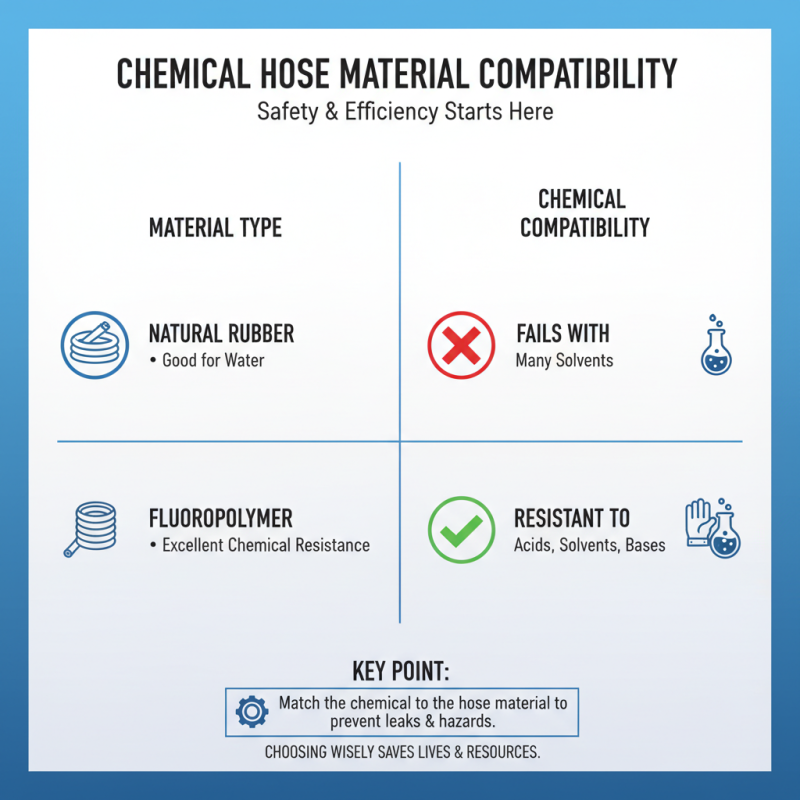
Choosing the right chemical hose is crucial for safety and efficiency. Understanding material compatibility is a significant factor in this process. Different chemicals can react with various hose materials, leading to leaks or even hazardous situations. Natural rubber, for example, is excellent for water but fails with many solvents. On the other hand, fluoropolymer hoses are highly resistant but may be more expensive.
Consider the specific chemicals you'll be dealing with. Their temperature and pressure levels also matter. High temperatures can degrade rubber, while metal hoses might corrode with certain acids. Assessing the compatibility of your materials can save you time and prevent mishaps. Understanding the chemical composition can be challenging yet rewarding.
Not every hose will meet your needs perfectly. Many users overlook subtle effects, such as the potential for permeation. This can allow chemicals to escape even when the hose appears intact. Testing different options is often necessary before settling on a choice. It’s essential to remain vigilant, as improper selection can lead to safety issues or increased downtime.
Assessing Pressure Ratings and Temperature Limits for Hoses
When choosing a chemical hose, pressure ratings and temperature limits are crucial elements. Different applications require specific ratings to ensure safety and efficiency. For instance, hoses might need to withstand pressures of up to 300 psi for certain chemicals, while others might require a much lower tolerance. Using a hose that does not meet the necessary pressure ratings can lead to catastrophic failures or leaks.
Temperature limits must also align with the materials being transported. A report by the American Society for Testing and Materials (ASTM) indicates that many common chemical hoses operate effectively between -40°F to 180°F. However, this range can vary widely depending on the chemical being handled. Always verify the compatibility of the hose material with the temperature of the chemical. Ignoring this can result in hose degradation, ultimately failing during crucial operations.
Failure to correctly assess these parameters often leads to oversights in safety measures. It’s essential to consult manufacturer specifications and industry standards to ensure the chosen hose meets both pressure and temperature demands. This diligence is integral to maintaining operational integrity in any facility handling chemicals.
How to Choose the Right Chemical Hose for Your Needs?
| Hose Type |
Pressure Rating (psi) |
Temperature Limit (°F) |
Typical Applications |
| PVC Hose |
150 |
120 |
Agriculture, General Purpose |
| Rubber Hose |
300 |
200 |
Industrial Chemicals, Air & Water |
| Silicone Hose |
250 |
500 |
Food and Beverage, High-Temperature Applications |
| PTFE Hose |
350 |
450 |
Chemical Transfer, Pharmaceutical |
| EPDM Hose |
200 |
300 |
Agricultural Chemicals, Water |
Important Safety Standards and Certifications for Chemical Hoses
When selecting a chemical hose, understanding safety standards and certifications is crucial. Chemical hoses must meet specific industry regulations to ensure safe handling of hazardous materials. The American Society for Testing and Materials (ASTM) provides essential guidelines regarding the durability and compatibility of hose materials. Adherence to these standards can prevent disasters in industrial settings.
Many organizations recommend using hoses certified by the National Hose Manufacturers Association (NHM) and the American National Standards Institute (ANSI). These certifications indicate that the hose has undergone rigorous testing for performance and safety. A hose that meets these criteria can greatly reduce risks associated with chemical spills or reactions.
Tip: Check the certification labels on hoses before purchasing. Ensure they match the chemicals you'll be using.
Moreover, it’s important to recognize potential shortcomings in hose selection. Some hoses may not perform well in extreme temperatures or certain chemical environments. Regular inspections can reveal deterioration that may not be immediately visible.
Tip: Create a routine inspection schedule. Look for abrasions, cracks, or leaks that could indicate failures.
Careful selection based on verified standards is vital to maintaining workplace safety and compliance. Don't overlook the significance of these details; proper choices save lives.
Chemical Hose Properties Comparison