2026 How to Choose the Best Chemical Resistant Hose for Your Needs?
Choosing the right Chemical Resistant Hose can significantly impact your operations. Selecting a hose is not just about the material. The working environment, fluid type, and temperature are critical factors. Many users overlook these essential details, leading to premature wear or failure.
A proper Chemical Resistant Hose must withstand specific chemicals without degrading. Each application is unique. Therefore, understanding your requirements is crucial. Even minor mistakes can result in leaks or safety hazards. Consider the hose’s flexibility and diameter as well, as these affect its performance.
Experts suggest evaluating the manufacturer's specifications and recommendations. Reliable brands often provide detailed information about their products. Take time to read reviews and seek advice from experienced professionals. Your choice may determine efficiency and safety in your chemical handling processes.
Understanding Chemical Resistance: Key Considerations for Hoses
When choosing a chemical-resistant hose, understanding the unique properties of materials is crucial. Each material offers different resistance levels to specific chemicals. For example, a report from the Chemical Resistance Database highlights that fluoropolymer hoses can withstand a wide range of aggressive substances. However, not every fluoropolymer is suited for all environments. Users must consider temperature ranges, pressure ratings, and the specific chemicals they will encounter.
Chemical compatibility charts provide vital insights but can sometimes be misleading. For instance, certain acids may degrade rubber hoses faster than indicated. It’s essential to conduct real-world testing. That approach allows for a better understanding of how a hose will perform under actual operating conditions. A study by the Hose Manufacturers Association indicates that over 30% of hose failures relate to improper material selection. Therefore, relying solely on data can be problematic without practical verification.
Users often overlook the importance of installation and maintenance factors that influence hose longevity. Proper securing and routing can prevent wear and strain. Moreover, environmental factors, such as exposure to ultraviolet light, can impact material integrity. Reflecting on these aspects can lead to better decisions in choosing the right hose to meet specific chemical handling needs. Balancing empirical data with first-hand experience is vital for optimal results.
2026 How to Choose the Best Chemical Resistant Hose for Your Needs?
| Criteria |
Description |
Example Chemicals |
Recommended Material |
| Temperature Resistance |
Ability to maintain performance at high or low temperatures. |
Acids, solvents |
PTFE (Teflon) |
| Chemical Compatibility |
Resistance to specific chemicals to avoid degradation. |
Oils, fuels |
EPDM, Nitrile |
| Pressure Ratings |
Maximum pressure the hose can withstand. |
Hydraulic fluids |
Reinforced rubber |
| Wear Resistance |
Ability to withstand abrasion and physical wear. |
Sand, gravel |
Polyurethane |
| Flexibility |
Ease of handling and installation without kinking. |
Water, detergents |
Silicone, PVC |
Types of Materials Used in Chemical Resistant Hoses and Their Properties
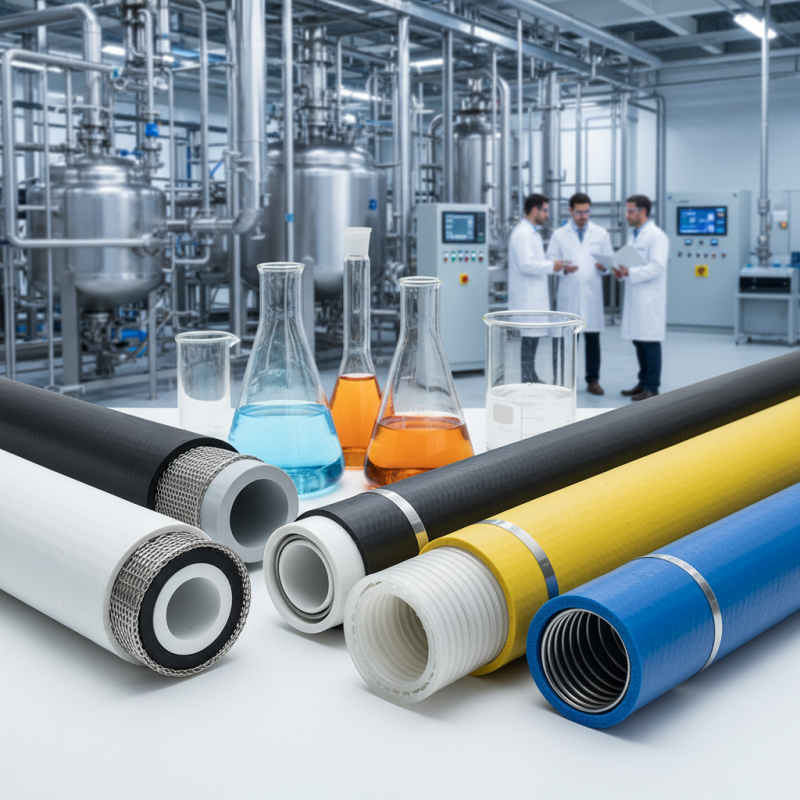
Choosing the right chemical resistant hose can significantly impact your projects. Different materials provide varying levels of resistance to chemicals. Common materials include PVC, rubber, and Teflon. Each material has unique properties, making it suitable for specific applications.
PVC hoses are lightweight and flexible. They work well with mild chemicals but may not endure harsher environments. Rubber hoses offer better elasticity and resistance to more aggressive chemicals. However, they can be less flexible in cold conditions. Teflon hoses boast the highest chemical resistance. They perform well at extreme temperatures and pressures but can be expensive.
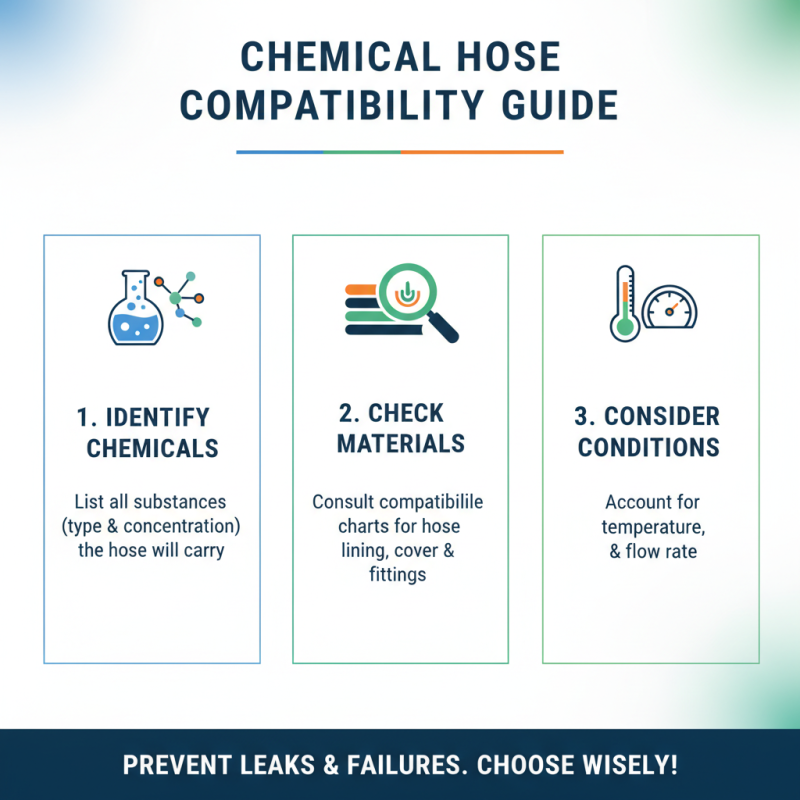
When selecting a hose, consider the type of chemicals it will carry. Check compatibility charts to ensure the chosen material can handle the specific chemicals without degrading. Always consult technical data sheets for insights into temperature and pressure ratings.
**Tip:** Regularly inspect hoses for wear. Even the best materials can degrade over time.
**Tip:** If uncertain, seek advice from a professional. They can help match the right hose to your needs.
Factors to Assess When Selecting a Chemical Resistant Hose
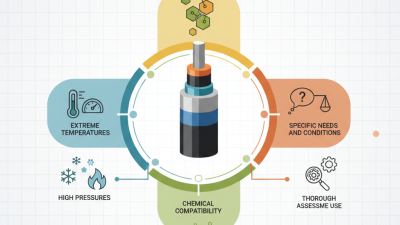
When selecting a chemical resistant hose, you must consider various factors. First, evaluate the type of chemicals the hose will transport. Different materials have different resistance levels. For instance, rubber might not suit certain acids. Look for hoses made from thermoplastics or Teflon for better chemical compatibility.
Length and diameter are essential as well. A hose that is too long can reduce pressure and flow rates. Opt for the right diameter to ensure efficient transport without leaks. Also, check the temperature rating of the hose. High heat can affect material integrity over time.
**Tips:** Test hoses under real conditions. This can reveal weaknesses. Regularly inspect hoses for wear. Pay attention to signs of damage. A small crack can lead to significant issues later on.
Your experience matters too. Consult with industry experts when in doubt. They offer insights that can prevent costly mistakes. Keep all factors in mind to ensure you select the best hose for your specific needs.
2026 Chemical Resistant Hose Selection Factors
How to Determine the Compatibility of Hose with Specific Chemicals
When selecting a chemical resistant hose, understanding chemical compatibility is crucial. Not all hoses are created equal. Different materials react differently to various substances. This means selecting the right hose can prevent leaks or failures in your system.
Begin by identifying the chemicals you will transport. Research their properties, including temperature and pressure levels. Consult compatibility charts for hose materials. For instance, PVC hoses might not withstand certain solvents, while rubber can perform well under various conditions. Always think about the long-term effects of chemicals on hose integrity.
**Tips:** Regularly inspect hoses for wear. Check for discoloration or cracks, as these can indicate chemical damage. Maintain proper storage conditions to prolong hose life.
Consider environmental factors as well. Hoses exposed to sunlight may degrade faster. Evaluate the surrounding environment to ensure the hose will not be compromised. It's wise to have a backup plan. In case of unexpected chemical interactions, a secondary containment solution is advisable. Reinforce your choices by consulting with experts in chemical transport. Their insights often highlight nuances that a standard chart may overlook.
Maintenance and Care Tips for Chemical Resistant Hoses
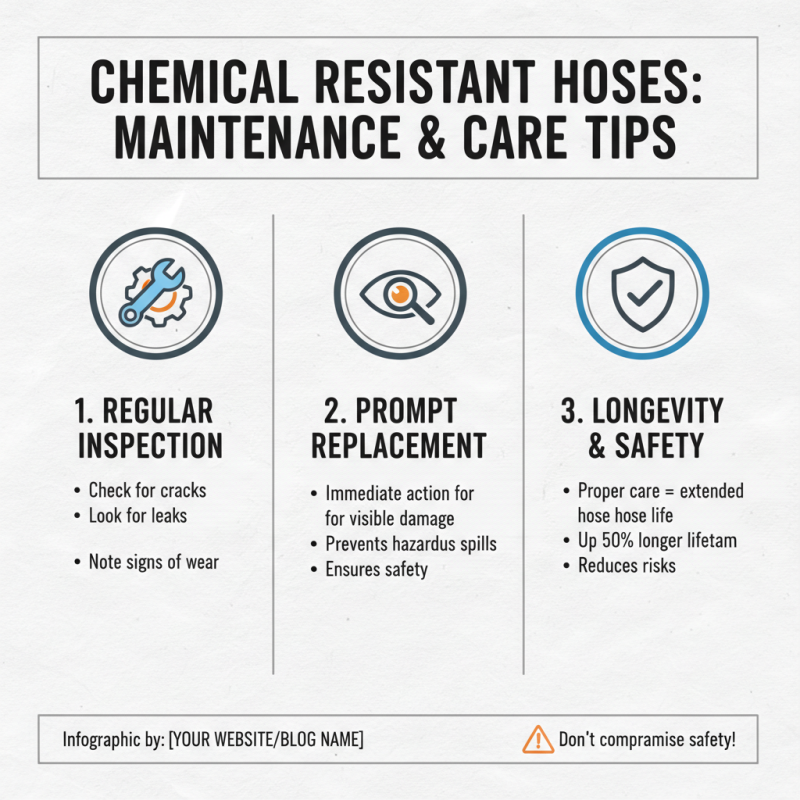
Proper maintenance of chemical resistant hoses is essential for longevity and safety. Research indicates that improper care can reduce a hose's life by up to 50%. Regularly inspect hoses for cracks, leaks, and signs of wear. Any visible damage should prompt immediate replacement to prevent hazardous spills.
Cleaning is equally critical. Use appropriate solutions to remove chemicals effectively. A study by the Chemical Hose Association shows that rinsing with water after use decreases residue buildup significantly. Store hoses in a cool, dry place away from direct sunlight. Exposure to UV light can weaken the material, leading to premature failure.
It's important to remain aware of the specific chemicals your hose handles. Compatibility charts provided by industry organizations can guide users in selecting the right hose materials. Often, users overlook this, leading to unexpected failures. Thorough understanding and care can extend the life of your hoses significantly, ensuring safer operations in chemical handling.