Top 10 Air Rubber Hose Models You Should Consider for Your Workshop?
When setting up a workshop, choosing the right tools is essential. One critical component is the Air Rubber Hose. This versatile tool is widely used in various industries, from automotive to construction. According to recent industry reports, the demand for high-quality air hoses has increased by 25% over the last five years. Reliable equipment ensures safety and efficiency.
Air Rubber Hoses are designed to handle hot and cold environments. Many models offer superior flexibility and durability. However, not all hoses perform the same. Some fail under pressure or temperature extremes. Users must consider factors like hose diameter, length, and material.
Selecting the right model can be overwhelming. With numerous options available, it’s easy to feel lost. Not all brands deliver promised quality. Investing time in research can lead to better performance and longevity. Reliable sources suggest prioritizing features based on specific workshop needs. This approach ultimately saves money and enhances productivity.
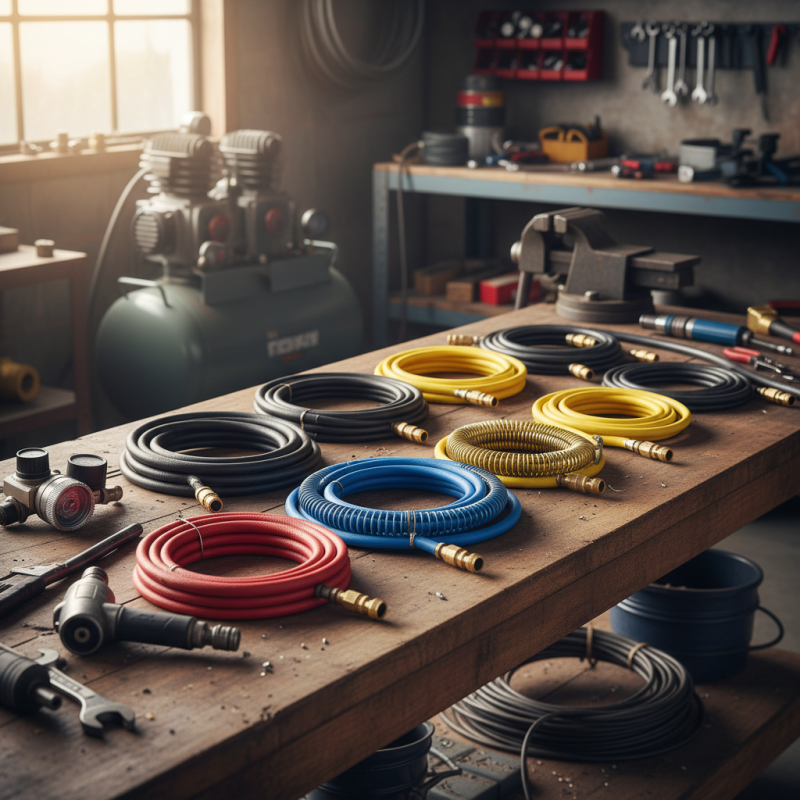
Overview of Air Rubber Hoses and Their Importance in Workshops
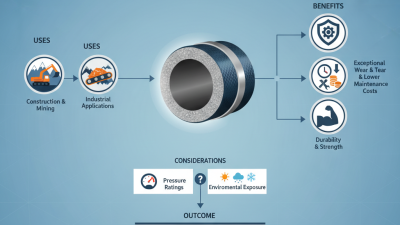
Air rubber hoses play a crucial role in workshop environments. They are designed to transport compressed air from a source to various tools and equipment. This flexibility allows for efficient operation of pneumatic tools, which is essential for tasks like painting, sanding, and drilling.
The importance of these hoses cannot be overstated. They help maintain consistent air pressure, ensuring optimal performance of your tools. A high-quality air rubber hose can withstand wear and tear, making it a dependable choice for daily use. However, improper storage can lead to kinks and damage. Avoid leaving hoses in direct sunlight or extreme temperatures. Over time, this can compromise their integrity.
Consider how often you use your pneumatic tools. Regularly check your hoses for signs of wear. Look for cracks or leaks that could reduce air flow. Investing in a durable air rubber hose can make a significant difference in productivity. If you notice any issues, don't hesitate to replace them. Ignoring these problems can lead to costly repairs or equipment failure down the line.
Overview of Air Rubber Hoses and Their Importance in Workshops
Air rubber hoses are essential tools in workshops, providing flexibility and durability for a range of tasks. This chart illustrates key specifications of the top air rubber hose models which are crucial for understanding their performance and suitability for various applications.
Key Features to Look for in a Quality Air Rubber Hose
When selecting an air rubber hose for your workshop, it's vital to consider several key features. Look for a hose that offers flexibility and durability. A well-made rubber hose should easily bend without kinking. This will enhance maneuverability in tight spaces.
Many hoses have different diameters. Choose the right size to ensure optimal airflow. A thicker hose can transport air more efficiently.
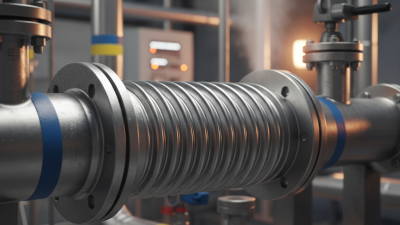
Another important feature is the temperature resistance of the hose. It should perform well in different climates. Extreme temperatures can damage hoses. Inspect the hose for quality connectors. These should fit securely, minimizing air leaks. A quality hose will have a sturdy outer layer. This protects the inner tubing from abrasions and punctures, ensuring a longer lifespan.
While aesthetics matter, functionality is crucial. A bright color can aid visibility in a busy workshop. However, don’t compromise on strength for looks. Check for a warranty. Reliable brands often offer guarantees, which reflect their confidence in the product. Remember, a hose is a critical component in your workshop. Investing time in finding a suitable one can save you future frustrations and money.
Top 10 Recommended Air Rubber Hose Models for Workshop Use
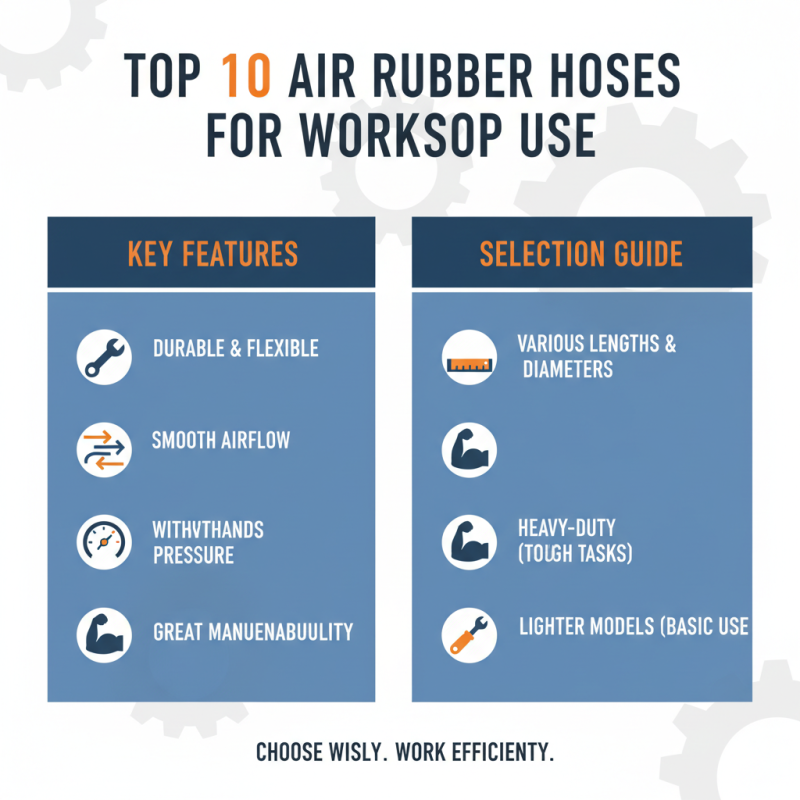
When setting up a workshop, choosing the right air rubber hose is crucial. Optimal hoses are durable yet flexible, ensuring smooth airflow. A good air rubber hose can withstand pressure while providing great maneuverability. Varied lengths and diameters are available, so select according to your workspace needs. Heavy-duty options are ideal for tough tasks, while lighter models suit more basic applications.
Consider the material quality too. Hoses made from strong synthetic rubber resist wear and tear. Look for options that offer UV resistance and can handle extreme temperatures. A hose that kinks easily can lead to frustration and affect performance. Regular inspections for signs of damage are essential. Even the best hoses require some care. Tailor your selection based on specific projects, ensuring that you have the best tools for the job. Investing time in research can make a significant difference in efficiency and results.
Comparison of Performance Metrics Among Leading Air Rubber Hoses
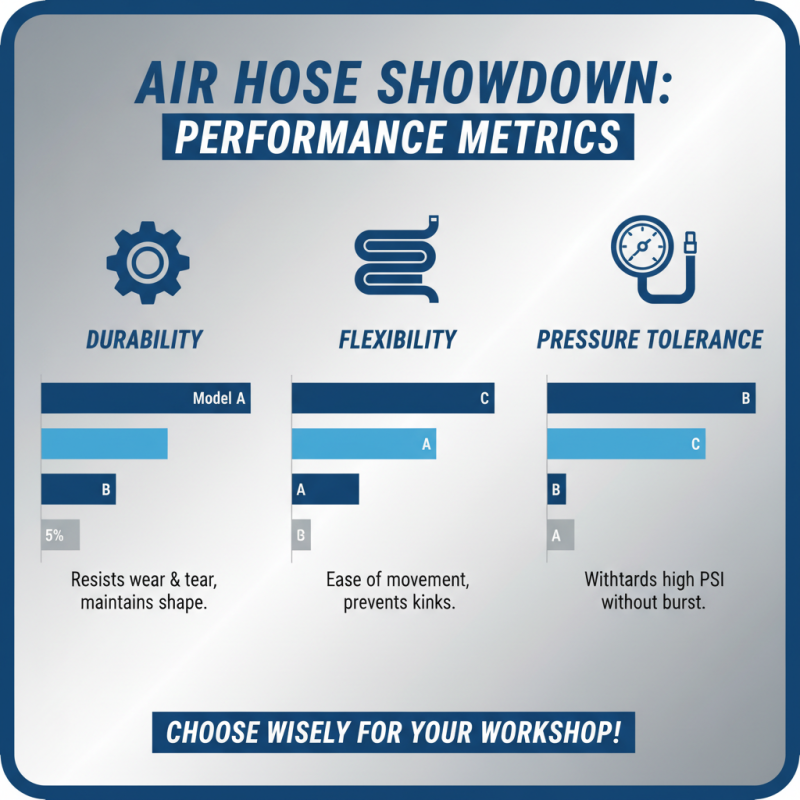
When choosing the right air rubber hose for your workshop, performance metrics are crucial. Various models exhibit differences in durability, flexibility, and pressure tolerance. A hose with high durability will resist wear and tear over time. Look for rubber blends that can withstand harsh conditions while maintaining their shape.
Flexibility is another key metric. A highly flexible hose allows for easier handling and maneuverability. It adapts well to tight spaces and various angles, making it suitable for different tasks. Pressure tolerance is vital, too. Hoses rated for high pressure ensure safety and efficiency during operation.
Not all hoses perform equally under stress. Some may kink or collapse under high pressure, leading to performance issues. Reflecting on the materials used in construction can provide insights into long-term reliability. Seek hoses that balance all essential metrics for a well-rounded option in your workshop.
Maintenance Tips to Extend the Life of Your Air Rubber Hose
Maintaining your air rubber hose is essential for longevity and efficiency. First, always check for wear and tear. Small cracks can lead to larger leaks. If you notice any damage, replace the hose immediately. It's cheaper than dealing with air compressor failures.
Regularly cleaning your hose can prevent clogs and buildup. Use mild soap and water to wash it. After cleaning, make sure to dry it completely. Storing the hose in a cool, dry place helps prevent degradation. Avoid areas with high temperatures or direct sunlight.
Be mindful of the connections too. Loose fittings can cause air loss. Ensure they are tight and leak-free. When in use, avoid dragging the hose across rough surfaces. This can lead to unexpected wear. These small practices can go a long way in maintaining your air rubber hose.