Leave Your Message
*Name Cannot be empty!
* Enter product details such as size, color,materials etc. and other specific requirements to receive an accurate quote. Cannot be empty

Top 10 Conveyor Belt Cleaners Which One Is Best?

Choosing a Conveyor Belt Cleaner is rarely as simple as comparing product prices or blade materials. A cleaner that performs well on a dry limestone line may struggle with wet clay, sticky coal, or frozen aggregate. Belt speed, pulley diameter, material moisture, belt condition, and transfer-point design all change the result. Small details matter. A few millimeters of misalignment can leave a dark strip of carryback along the return belt.

R. Todd Swinderman, a respected conveyor safety and maintenance expert, has emphasized a practical industry principle: “The best belt-cleaning system is the one that consistently removes carryback without damaging the belt.” That idea should guide this comparison. Strong cleaning pressure alone is not enough. The blade must maintain contact, release safely during splices, and remain serviceable when dust covers every surface. Maintenance access also matters. A cleaner that requires two workers and half a shift may look impressive, but perform poorly in real operations.

This guide, “Top 10 Conveyor Belt Cleaners: Which One Is Best?”, examines leading designs through practical criteria. We consider cleaning efficiency, belt protection, installation, adjustment, replacement cost, and performance in demanding conditions. There is no universal winner. That is the uncomfortable part. A primary cleaner may handle heavy carryback, while a secondary cleaner produces a smoother return belt. Sometimes, the best answer is a correctly aligned system rather than a single premium device. These evaluations are intended to support informed decisions, not replace site testing, manufacturer guidance, or experienced maintenance judgment.
Top 10 Conveyor Belt Cleaners Which One Is Best?

What Conveyor Belt Cleaners Are and How They Work

Top 10 Conveyor Belt Cleaners: Which One Is Best?

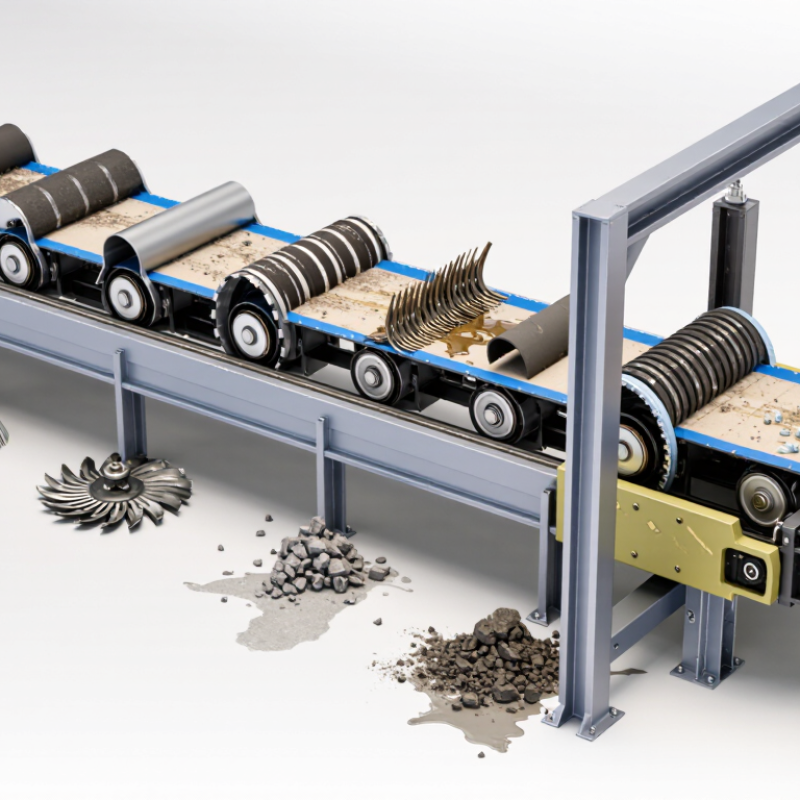
Conveyor belt cleaners remove carryback after material leaves the discharge point. A primary cleaner scrapes bulk material from the belt surface. Secondary and tertiary cleaners remove thinner, stubborn residue. Each cleaner uses controlled contact, not excessive pressure. Too much pressure can damage the belt or shorten blade life.

The Conveyor Equipment Manufacturers Association explains that cleaner selection depends on belt speed, material size, moisture, and belt construction. A 2024 Grand View Research report valued the global conveyor belt market at approximately 5.5 billion dollars in 2023. Mining and bulk handling remained major application areas. That scale shows why small carryback losses deserve attention. A wet limestone belt may need flexible polyurethane blades. A dry, abrasive ore stream may require stronger carbide-tipped designs. Placement matters too. The primary cleaner sits near the head pulley, while secondary cleaners work farther along the return path.

Field inspections reveal the practical difference. Check the belt after ten minutes of operation. Look for a clean strip, uneven wear, vibration, or material trapped near the splice. Cleaner tension should remain stable as the blade wears. An operator may prefer the most aggressive cleaner, but that choice can be wrong. A softer blade may perform better on a delicate belt. There is no perfect cleaner. I have found that maintenance access, not purchase price, often determines real performance. The best system is the one workers can inspect safely and adjust consistently.
Top 10 Conveyor Belt Cleaners: Which One Is Best?

Conveyor belt cleaners remove carryback from the belt after material is discharged. The best choice depends on material moisture, abrasiveness, belt speed, temperature, and the required level of cleaning. The chart uses a comparative 1–5 engineering index based on common cleaner characteristics; it is not a manufacturer test result.

How they work: Primary and secondary scrapers remove bulk and residual material at the head pulley. Tertiary cleaners provide additional fine cleaning, while brushes, air knives, and water sprays are commonly selected for specific material or environmental conditions. Plows protect the return side of the belt from damaging buildup.

Key Types of Conveyor Belt Cleaners and Their Main Uses

Top 10 Conveyor Belt Cleaners: Which One Is Best?

Key Types of Conveyor Belt Cleaners and Their Main Uses

Choosing a conveyor belt cleaner starts with the material, not the price. Primary scrapers remove heavy carryback near the head pulley. Secondary scrapers target thinner residue. Tertiary cleaners polish the belt surface. V-plows protect return rollers from trapped rocks. Diagonal plows suit belts carrying dry, loose material. Rotary brushes work well with fine powders. Air knives remove light dust without touching the belt. Wash systems handle sticky, wet products. Waterless brush units reduce moisture concerns. Combination systems support difficult, changing conditions.

Grand View Research estimated the global conveyor system market at about 10.6 billion dollars in 2023. Its forecast indicates continued growth through 2030. That expansion increases demand for reliable belt-cleaning equipment. CEMA guidance also stresses belt speed, splice design, material abrasiveness, and cleaner tension. These details affect wear and cleaning performance. A harsh iron-ore stream may need tungsten-carbide scraping tips. A damp clay stream may need flexible blades and controlled water.

Field inspections often reveal a simple mistake: one cleaner is expected to solve every problem. It rarely does. Excessive tension can damage belt covers. Weak tension leaves a dirty return run. Operators should inspect the discharge zone, measure carryback, and check blade wear weekly. Reported performance also needs caution. A cleaner can appear effective during a dry shift, then struggle after rain. The best choice is the type matched to particle size, moisture, belt speed, splice construction, and maintenance access.

Top 10 Conveyor Belt Cleaners — Which One Is Best? Key Types of Conveyor Belt Cleaners and Their Main Uses
No. Cleaner Type Cleaning Position or Design Main Uses Common Blade or Contact Material Typical Installation Location Main Strength Important Limitation Maintenance Consideration Best Overall Fit
1 Primary Belt Scraper Heavy-duty scraper positioned against the head pulley Removes thick, adherent material from the loaded side of the belt after discharge Polyurethane, carbide-tipped, or abrasion-resistant metal blades At or immediately below the head pulley Handles high material loads and coarse carryback efficiently May not remove fine dust or material that remains after the primary cleaning zone Blade wear and tension or pressure settings must be checked regularly Excellent for bulk solids
2 Secondary Belt Cleaner Cleaner installed after the primary scraper, usually with closer belt contact Removes residual fines and sticky particles left on the belt surface Tungsten carbide, polyurethane, ceramic, or composite segments Beneath the carryback side of the belt, downstream from the head pulley Provides a more complete cleaning result when used with a primary scraper Requires correct alignment and adequate clearance to avoid belt or splice damage Inspect segments, mounting hardware, and belt tracking frequently Best for low carryback
3 V-Plow Belt Cleaner V-shaped plow mounted on the return side of the conveyor Diverts trapped rocks and bulk material before they reach the tail pulley Polyurethane, rubber, or abrasion-resistant polymer Return belt, usually before the tail pulley Protects pulleys from material trapped between the belt and pulley Does not clean the full carrying surface of the belt Check plow contact, wear, mounting, and material discharge path Best for pulley protection
4 Diagonal Return-Belt Plow Angled plow that pushes material toward one side of the return belt Removes scattered lumps and debris from the return belt before the tail pulley Polyurethane or resilient rubber wear strips On the return strand, positioned diagonally across the belt Suitable where a V-plow is unsuitable because of conveyor layout Requires a suitable side discharge area and may create lateral belt forces Inspect wear strip condition and confirm that the belt remains centered Best for narrow layouts
5 Brush Belt Cleaner Rotating cylindrical brush contacting the belt surface Cleans fine particles, powders, food residues, and relatively light carryback Nylon, polypropylene, polyester, or other application-specific bristles Usually below the return side or near the discharge area Gentle cleaning action works well on textured and cleated belts Bristles can wear quickly with sharp, abrasive, or heavy material Clean accumulated material and monitor brush diameter and drive components Best for delicate surfaces
6 Water Spray Belt Washer Pressurized water jets combined with scrapers or brushes Removes sticky, soluble, or hygienically sensitive residues from the belt Food-grade brushes, rubber squeegees, stainless steel, and compatible polymers A dedicated wash station on the return side of the conveyor Provides deep cleaning where dry scraping is insufficient Needs water management, drainage, corrosion control, and wastewater handling Clean spray nozzles, inspect hoses, and manage water quality and drainage Best for wet or sanitary duty
7 Air Knife Belt Cleaner High-velocity air stream directed across the belt surface Removes lightweight dust, loose particles, and moisture without direct mechanical contact Non-contact system; usually uses stainless steel or coated air nozzles Near the discharge or return path with an enclosed collection area Low physical wear because the cleaning element does not touch the belt Less effective against sticky, heavy, or strongly bonded carryback Maintain filters, compressors, air pressure, and dust collection equipment Best for dry, light residue
8 Belt Scraper with Spring Tensioning Scraper blade held against the belt by springs or resilient tension elements General-purpose cleaning on conveyors with changing belt thickness or minor belt movement Polyurethane, rubber, or segmented wear-resistant blades Most commonly installed at the head pulley or a secondary cleaning point Maintains contact during small belt movements and helps reduce manual adjustment Excessive tension can increase belt wear and damage mechanical belt splices Set spring force correctly and inspect springs, pivots, and blade wear Best for variable conditions
9 Belt Cleaner for Cleated or Profiled Belts Segmented or flexible cleaning system designed to pass over belt profiles Cleans cleated, ribbed, chevron, and textured belts without interfering with belt geometry Flexible polyurethane, rubber fingers, or profile-compatible composite elements At the discharge area or on the return side, depending on belt design Accommodates raised profiles that conventional rigid scrapers may damage Cleaning performance depends strongly on profile height, spacing, and belt speed Check flexible elements, profile clearance, and belt tracking Best for profiled belts
10 Magnetic Belt Cleaner Magnetic roller or magnetic separator used to attract ferrous particles Removes iron and steel fragments from conveyed materials or protects downstream equipment Magnetic assembly with stainless steel or polymer guarding At a transfer point, discharge area, or beneath the material stream Targets ferrous contamination that ordinary scrapers cannot remove Does not remove non-magnetic carryback, dust, moisture, or sticky bulk material Remove collected metal, inspect guarding, and verify magnetic separation performance Best for ferrous contamination
Selection should consider material abrasiveness, moisture, stickiness, belt speed, belt profile, splice type, conveyor layout, allowable belt wear, and the required level of carryback control.

How to Compare the Top Ten Conveyor Belt Cleaner Designs

Top 10 Conveyor Belt Cleaners: Which One Is Best?

Comparing the top ten conveyor belt cleaner designs requires more than checking purchase prices. Start with the material, belt speed, moisture, and carryback level. Record these conditions during a normal production shift. A cleaner that performs well in dry testing may struggle with sticky clay or wet aggregate.

Review each design by function. Primary scrapers remove the thickest layer near the discharge pulley.

Secondary cleaners target the thin film left behind. Rotary brushes can suit textured belts, while air systems may reduce physical contact.

Plows protect the return side from large rocks. Water-assisted systems improve cleaning but require careful drainage and maintenance planning.

Measure results, not promises. Weigh carryback from a fixed belt length before and after installation. Check belt tracking, splice wear, blade pressure, and cleaning consistency. Inspect the cleaner after several hours, not just after a fresh installation. Small changes in blade angle can affect performance.

My first comparison was too simple.

I once judged a design by cleanliness alone. Later, I found that frequent blade replacement erased its labor savings.

A reliable comparison should include service access, adjustment time, spare-part life, energy use, and water consumption.

Operators also need safe access around moving equipment. The best design depends on the site.

A low-maintenance scraper may outperform a more advanced system when conditions remain stable, but difficult materials may justify a combined arrangement.

Which Conveyor Belt Cleaner Best Fits Each Operating Condition

Top 10 Conveyor Belt Cleaners: Which One Is Best?

The best conveyor belt cleaner depends on the operating condition, not popularity. Wet, sticky materials need a flexible primary scraper and a corrosion-resistant secondary blade. Dry, dusty products may perform better with a rotary brush or air knife. Abrasive stone requires durable polyurethane or carbide-tipped components. The wrong blade can polish the belt, increase carryback, or damage splices. I have found that belt speed, moisture, temperature, and product size often matter more than the cleaner’s advertised capacity.

Tips: Check belt tension, pulley diameter, and splice design before selecting a cleaner. Measure carryback during a full production shift, not during a short test. Leave room for safe inspection. Small details matter.

For high-temperature materials, choose components rated for continuous heat, because ordinary elastomers can harden quickly. Food-processing lines need hygienic designs, easy washdown, and materials suitable for the application. In freezing conditions, ice buildup may require heated zones or a carefully positioned scraper. A two-stage cleaning system often works well on heavy carryback, but it needs correct tension and alignment. More cleaning pressure is not always better. Excess force can shorten belt life and increase maintenance. Conditions also change during the year, so a cleaner selected in a dry season may perform poorly during wet production. Testing remains essential, and my initial choice is not always the final answer.

Safety, Maintenance, and Selection Criteria for Belt Cleaners

Choosing among the top 10 conveyor belt cleaners should begin with safety, not cleaning speed. The U.S. Bureau of Labor Statistics reported 5,283 fatal work injuries in 2023. Conveyors need disciplined controls. Guards must cover nip points, and lockout procedures must remain practical during blade changes. A cleaner that forces awkward access is a poor choice.

CEMA’s Belt Conveyors for Bulk Materials guidance links cleaner selection to belt speed, material moisture, carryback, splice design, and available tension. Primary cleaners suit heavy material release near the head pulley. Secondary cleaners target the thin residue left behind. For wet clay, carbide blades may clog or wear unevenly. Ceramic or polyurethane options can behave differently. Test conditions matter.

Look closely at maintenance. Can one worker inspect the blade safely? Is tension visible? Does the design tolerate belt mistracking? A five-minute inspection can reveal a cracked mount, buried fines, or uneven contact. Small details matter. Yet cleaner ratings are not always comparable. Laboratory results may not reflect frozen material, worn belts, or sticky ore. Field trials should record carryback, blade life, belt damage, dust, and cleaning time. The best cleaner is often not the most aggressive one. It is the one that protects the belt, reduces exposure, and remains maintainable when conditions become unpleasant.