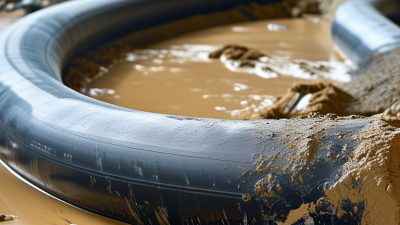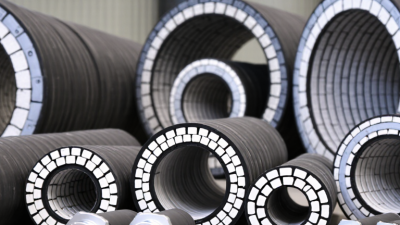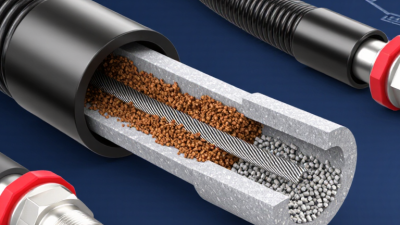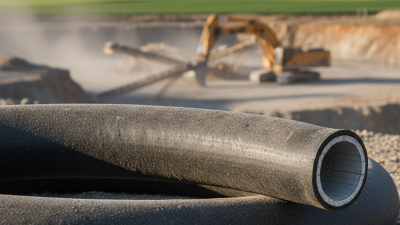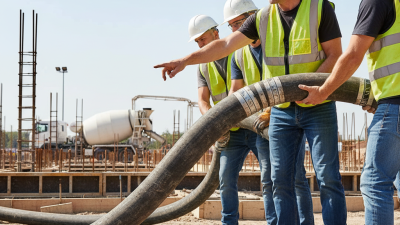
Choosing a Ceramic Lined Rubber Hose in 2026 requires more than comparing prices or catalog photographs. The correct hose must match the material, pressure, temperature, flow speed, and installation environment. Fine silica sand behaves differently from sharp crushed stone. Slurry density matters too.
Dr. Elena Marquez, a ceramic-wear specialist, explains, “A hose survives when its lining matches the punishment, not merely the process name.” This principle deserves attention. A ceramic lining may resist severe abrasion, yet poor rubber flexibility can create cracking near bends and flanges. The strongest ceramic is not automatically the best hose.
Field experience also reveals small details that specifications sometimes hide. Check the bend radius beside the pump outlet. Inspect flange alignment before tightening bolts. Look for exposed ceramic edges after cutting or handling. These details can determine service life.
Pressure ratings should be reviewed under actual operating temperatures. Vacuum conditions need separate consideration. Cyclic movement can be more damaging than steady pressure. Do not rely on a single laboratory abrasion value.
A dependable selection process includes lining thickness, ceramic shape, rubber compound, reinforcement layers, connection style, and maintenance access. Ask the supplier for test data, production records, and clear failure limits. Vague claims deserve caution.
No selection method is perfect. Site conditions change. Operators make mistakes. Even a well-designed Ceramic Lined Rubber Hose can fail when unsupported, sharply bent, or exposed to unexpected chemicals. That is why this 2026 guide focuses on practical evidence, honest limitations, and choices that remain defensible after installation.
How to Choose Ceramic Lined Rubber Hose in 2026?
Start with the actual service conditions, not the catalog description. Measure particle size, particle shape, slurry velocity, solids concentration, temperature, and pressure. A fine, dense slurry can wear differently from coarse particles at the same flow rate. Sharp particles are especially aggressive. Record the largest particles too. One missed oversize particle may damage an otherwise suitable hose.
Velocity needs careful attention. Higher flow speeds increase impact and friction inside bends, reducers, and discharge points. Solids content also changes the slurry’s weight and flow behavior. A hose handling 30% solids may perform poorly at 60%, even with identical pipe dimensions. Use operating data from the site, not only design estimates. Field readings can be untidy, but they reveal real conditions.
Check both working pressure and pressure surges. Pump starts, valve closures, and blocked outlets can create short pressure spikes. Temperature deserves equal care. Repeated heating and cooling may weaken the rubber backing, even when the average temperature looks acceptable. Ceramic lining improves abrasion resistance, but it does not remove every design limitation. Flexing radius, vibration, and support spacing still matter. A neat calculation is not enough. Recheck uncertain data before choosing the lining thickness and hose construction.
| Service Case | Typical Particle Size | Flow Velocity | Solids Concentration | Temperature | Working Pressure | Recommended Ceramic Configuration | Selection Priority |
|---|---|---|---|---|---|---|---|
| Fine mineral slurry | Up to 1 mm | 2–4 m/s | 10–35% by weight | 5–60°C | Up to 10 bar | Standard ceramic tile or ceramic-lined bend sections; prioritize chemical compatibility of the rubber tube. | Medium wear demand |
| Typical abrasive slurry | 1–5 mm | 3–5 m/s | 20–50% by weight | 5–80°C | 10–16 bar | Dense alumina ceramic lining with reinforced rubber cover; use additional wear protection at elbows and reducers. | High wear demand |
| Coarse sand and gravel slurry | 5–15 mm | 3–6 m/s | 25–60% by weight | 5–60°C | Up to 16 bar | Thick, impact-resistant ceramic segments with flexible rubber joints; confirm the maximum allowable particle size. | High impact demand |
| High-velocity hydrotransport | 0.5–5 mm | 5–8 m/s | 15–45% by weight | 5–60°C | 10–25 bar | High-density ceramic lining and pressure-rated reinforcement; inspect liner joints and hose end connections carefully. | Very high wear demand |
| Dense mineral concentrate | 0.1–3 mm | 2–4 m/s | 40–70% by weight | 5–60°C | 10–16 bar | Wear-resistant ceramic lining with a rubber compound selected for the slurry chemistry and high solids loading. | High solids demand |
| Intermittent impact service | 5–25 mm | 1–4 m/s | 20–60% by weight | 5–60°C | Up to 10 bar | Use impact-tolerant ceramic blocks or mosaics with a resilient rubber backing; avoid brittle, unsupported liner spans. | Very high impact demand |
| Warm abrasive slurry | Up to 5 mm | 2–5 m/s | 10–50% by weight | 60–90°C | Up to 16 bar | Specify a temperature-rated rubber compound and verify the adhesive, ceramic, and reinforcement limits at continuous service temperature. | Temperature-sensitive |
| Pressure surge or pulsating service | Up to 5 mm | 2–6 m/s | 10–50% by weight | 5–60°C | Static pressure up to 16 bar; surge must be assessed separately | Choose a hose with adequate safety margin, reinforced construction, flexible ceramic sections, and tested end connections. | Pressure-critical |
| Low-velocity settling-prone slurry | Up to 3 mm | Below 2 m/s | 30–60% by weight | 5–60°C | Up to 10 bar | Wear lining may be suitable, but pipeline layout, drainage, flushing, and minimum transport velocity must be reviewed to limit settling. | Deposition-sensitive |
| Non-abrasive liquid or dilute slurry | Up to 1 mm | 1–3 m/s | Below 10% by weight | 5–60°C | Up to 10 bar | A ceramic-lined hose may be unnecessary unless localized abrasion, elbows, or impact zones justify the added wear lining. | Low wear demand |
How to Choose Ceramic Lined Rubber Hose in 2026?
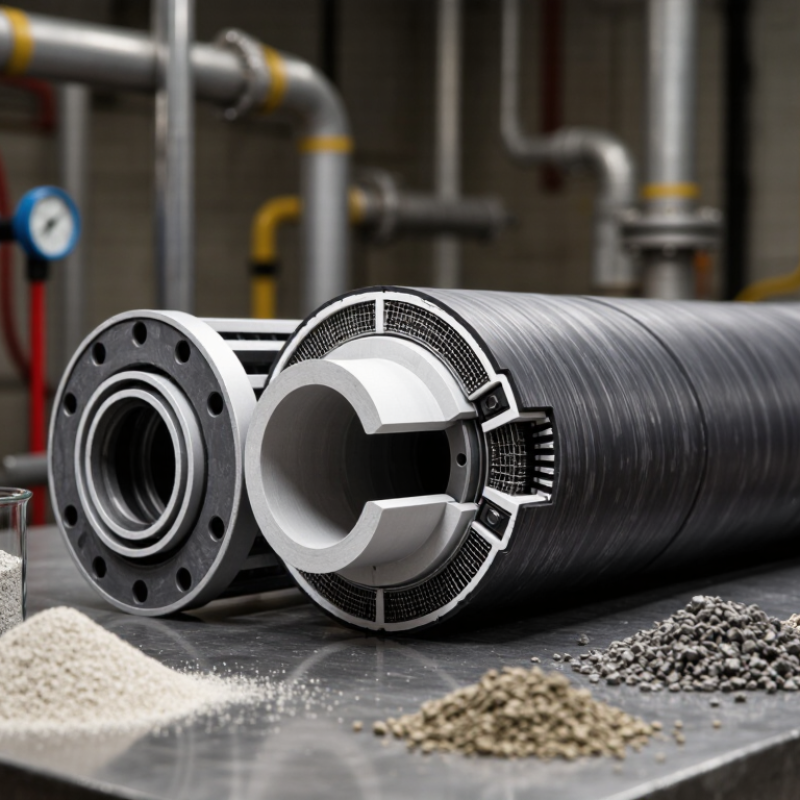
Selecting the ceramic is the critical decision. Alumina content commonly ranges from 92% to 99.5%. Higher alumina usually brings greater hardness, density, and abrasion resistance. Its Mohs hardness approaches 9, close to sapphire. This helps protect the hose when sharp sand, ore, clinker, or glass particles move continuously through the bore.
However, the hardest ceramic is not always the best choice. A 92% alumina lining may handle impact better in some transfer lines. A 99.5% grade can resist severe sliding wear, but it may be less forgiving under sudden mechanical shock. That trade-off deserves attention. Not every failure comes from abrasion.
Inspect the complete hose design. Check ceramic tile shape, joint quality, rubber flexibility, pressure rating, temperature range, and minimum bend radius. A hose that looks strong can still fail around a tight flange. Measure the bend before ordering. Also examine the expected particle size and flow speed. Fine powder wears differently from large, angular rocks.
Request hardness data and lining thickness from the supplier. Ask for abrasion testing that reflects your material, not only laboratory conditions. Inspect the inner bore after installation, especially near elbows and reducers. Small details matter. A practical selection combines 92–99.5% Al₂O₃ with suitable rubber support, correct movement allowance, and verified production quality. Misjudging impact loads remains an easy mistake, even with high-grade ceramic.
Select ceramic: 92–99.5% Al₂O₃ with Mohs hardness near 9.
Higher alumina content generally supports greater wear resistance and more consistent ceramic performance. Typical alumina ceramic grades have a Mohs hardness close to 9; actual hardness depends on composition, density, grain structure, and manufacturing process. Confirm the supplier’s technical data for slurry concentration, particle size, impact angle, temperature, and pressure before selecting the hose.
Rubber hardness strongly affects how a ceramic lined hose performs. Specify 60–80 Shore A hardness, measured according to ASTM D2240. Softer rubber near 60 Shore A bends more easily around pumps and tight routing. It also absorbs vibration better. However, very soft rubber may deform under pressure or repeated movement. Harder rubber near 80 Shore A supports the ceramic lining and resists mechanical wear. It usually needs a larger bending radius.
Check the test conditions carefully. ASTM D2240 results can change with temperature, sample thickness, surface quality, and conditioning time. Ask for the measured value, not only a general hardness range. A 70 Shore A statement may hide a wide production variation. That matters. During inspection, compare the certificate with actual hose samples from the same production batch. Small differences can affect installation and service life.
Match hardness with the working details. Abrasive slurry, impact, pressure, temperature, and movement should guide the specification. A flexible discharge line may benefit from 60–70 Shore A rubber. A fixed transfer line with severe abrasion may require 70–80 Shore A. Ceramic thickness and bonding quality also matter. Hardness alone cannot predict performance. I have seen hoses selected by abrasion data only, then fail at the flange because bending stress was ignored. Leave room for doubt, and review the routing before approval.
Choosing a ceramic-lined rubber hose in 2026 requires more than comparing catalog thickness. Wear data must match the material duty. ASTM G65 measures abrasive loss using a dry sand/rubber-wheel test, commonly reported as volume loss in mm³. Method A uses 6,000 wheel revolutions and represents severe abrasion conditions (ASTM G65-16, 2021).
ISO 4649 reports rubber volume loss after contact with abrasive cloth. Its result is also expressed in mm³, but the test method, pressure, distance, and abrasive differ (ISO 4649:2017). Therefore, ASTM and ISO values should not be ranked directly. A lower number is useful only when test settings match the hose’s actual service. This is often overlooked.
Liner thickness changes the replacement interval, not the ceramic’s inherent wear resistance. A 3 mm liner may suit short bends with limited solids. A 6 mm liner offers more wear allowance for dense slurry. In highly abrasive transfer lines, 9 mm or more can be reasonable, but excessive thickness reduces flexibility and increases weight. Field inspection should measure the thinnest remaining liner near elbows, reducers, and discharge points. Published industrial wear studies repeatedly show that flow turbulence can dominate straight-line abrasion. That detail matters.
Ask suppliers for raw ASTM G65 or ISO 4649 results, test conditions, ceramic hardness, and thickness tolerance. Do not accept a single “wear-resistant” claim. Real service is messier.
How to Choose Ceramic Lined Rubber Hose in 2026?
A ceramic lined rubber hose must match the system, not just the media. Check the actual working pressure, including pump surges and temperature changes. A hose rated at 1.0 MPa may not safely handle repeated pressure spikes. Leave a practical safety margin. Do not treat the catalog rating as a guarantee.
Bend radius is equally important. Measure from the hose centerline, especially near the flange. A tight bend can crack ceramic tiles, flatten the bore, or stress the rubber cover. I once saw a short installation fail because the hose was forced around a sharp frame. The pressure looked acceptable. The geometry was not. Verify flange standards, bolt-hole count, drilling diameter, face type, and gasket position before delivery. Small mismatches create large delays.
Tips: Ask for pressure, bend-radius, and dimensional test records. Confirm hydrostatic testing requirements in writing. Inspect the ceramic lining for loose pieces, gaps, and uneven joints. Check the flange face for damage. A gentle visual and acoustic inspection can reveal concerns, but it cannot replace documented testing. If the hose carries abrasive slurry, request evidence of lining thickness and adhesion checks. Testing methods vary, and assumptions can be costly. Measure twice. Record everything.