Leave Your Message
*Name Cannot be empty!
* Enter product details such as size, color,materials etc. and other specific requirements to receive an accurate quote. Cannot be empty

How to Choose Flexible Stainless Pipe in 2026?

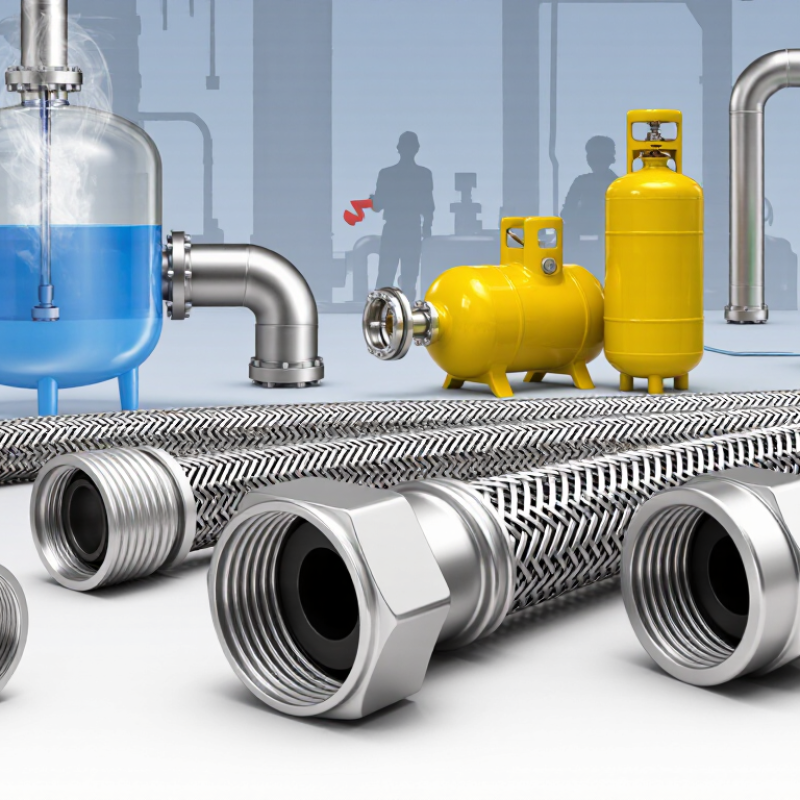
Choosing a Flexible Stainless Pipe in 2026 requires more than comparing prices or polished surface finishes. The right selection begins with the service conditions. Identify the transported medium, operating temperature, working pressure, movement frequency, and installation space. A pipe carrying hot water needs different protection from one handling corrosive chemicals or compressed gas.

Dr. Robert W. Messler Jr., a respected welding and materials specialist, has emphasized, “Material selection must follow the service conditions, not appearance.” That principle remains highly practical. Stainless steel grade matters. 304 may suit many general applications, while 316 often offers stronger resistance to chlorides and aggressive environments. Still, grade alone cannot guarantee performance.

Check the minimum bend radius carefully. Tight bends can fatigue the corrugations and damage the braid. Examine fitting quality, braid coverage, and end connections under real installation conditions. A short pipe may look efficient. It may also create excessive stress.

Think beyond the first installation.

Reliable manufacturers should provide pressure ratings, temperature limits, material certificates, and inspection records. These documents support confidence, but they do not replace engineering judgment. I have seen specifications copied without checking actual movement or vibration. That shortcut can become expensive.

The best Flexible Stainless Pipe balances flexibility, durability, chemical resistance, and maintainability. It should fit the system, not merely the catalog. Recheck assumptions before ordering. Small details often decide long-term safety.
How to Choose Flexible Stainless Pipe in 2026?

Define the Medium, Temperature, Pressure, and Movement Requirements

How to Choose Flexible Stainless Pipe in 2026?

Start with the medium, not the pipe size. List its chemical composition, concentration, cleanliness, and flow condition. Water, steam, gas, and corrosive chemicals require different stainless alloys and connection materials. Do not assume stainless steel suits every fluid. Check compatibility data from the manufacturer and your process engineer. Small impurities can matter.

Temperature changes the real performance of flexible stainless pipe. Record normal, minimum, and maximum temperatures, including cleaning cycles and sudden thermal shocks. Pressure ratings often decrease as temperature rises. Compare working pressure, test pressure, and pressure surges separately. A pipe carrying hot steam may need a larger safety margin than a cold-water line. This detail is easy to miss.

Movement must be measured, not guessed. Identify vibration, repeated bending, expansion, offset, and possible twisting. Measure the movement distance, frequency, and available bend radius. Never use a flexible pipe to correct poor alignment. That shortcut can fatigue the braid and fittings. In field inspections, unsupported lengths often create unexpected stress. I have seen apparently suitable assemblies fail early because torsion was ignored. That mistake deserves review.

Select the length and end connections after checking all four requirements. Use current technical data, applicable standards, and documented installation limits. Keep records of inspection intervals and visible braid damage. Flexible does not mean indestructible.
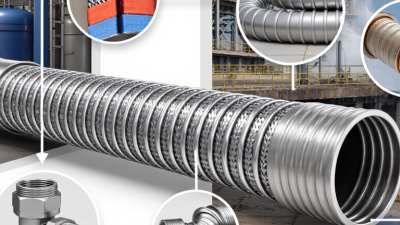
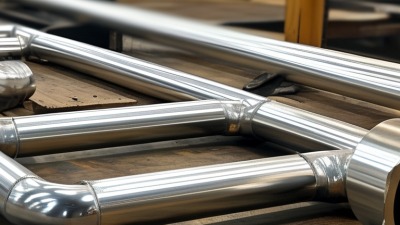
Compare 304 (18% Cr/8% Ni) and 316L (2–3% Mo) for Corrosion Resistance

How to Choose Flexible Stainless Pipe in 2026?

Choosing flexible stainless pipe starts with understanding the fluid, temperature, chloride level, and installation environment. Grade 304 contains about 18% chromium and 8% nickel. It performs well in clean water, indoor air, food-contact areas, and many mild chemical services. Its cost and availability can also support practical project decisions.

However, 304 can suffer pitting corrosion when chlorides collect inside corrugations or fittings. I have seen small salty deposits create pinholes near poorly drained connections. That detail is easy to miss. Grade 316L contains about 2–3% molybdenum, which improves resistance to chloride pitting and crevice attack. Its low carbon content also reduces weld-related sensitization during fabrication.

316L is usually the safer choice for coastal air, brine, process washdown, and uncertain chloride exposure. Still, it is not corrosion-proof. High temperatures, stagnant liquid, deposits, and damaged surfaces can defeat a good alloy. A mistake I still notice is choosing 316L without checking the actual fluid concentration. Another is ignoring the outer braid, weld quality, or fitting material.

Ask for material certificates, chemistry records, and pressure-test results. Confirm whether the pipe will be cleaned, drained, and inspected regularly. For demanding service, compare real operating data with corrosion tables and applicable engineering codes. Lab assumptions can be too optimistic.

How to Choose Flexible Stainless Pipe in 2026? — Compare 304 (18% Cr/8% Ni) and 316L (2–3% Mo) for Corrosion Resistance
Comparison Dimension 304 Stainless Steel 316L Stainless Steel Selection Guidance for Flexible Pipe
Typical Chemical Composition Approximately 18–20% chromium (Cr), 8–10.5% nickel (Ni), and a maximum carbon content of 0.08%. Approximately 16–18% chromium (Cr), 10–14% nickel (Ni), 2–3% molybdenum (Mo), and a maximum carbon content of 0.03%. 316L contains molybdenum for improved localized-corrosion resistance and lower carbon for better weld-area corrosion performance.
Main Corrosion-Resistance Advantage Strong general resistance to atmospheric corrosion, fresh water, many organic chemicals, and mildly corrosive service. Improved resistance to pitting and crevice corrosion, especially in chloride-containing environments.
Approximate PREN Range About 18–21, depending on the actual chromium, molybdenum, and nitrogen content. About 23–30, depending on the actual chromium, molybdenum, and nitrogen content. PREN is an indicative comparison, not a guaranteed corrosion-life prediction. The commonly used relationship is PREN ≈ %Cr + 3.3 × %Mo + 16 × %N.
Resistance to Chloride Pitting Moderate. Pitting can occur in seawater, salt deposits, chlorinated water, and concentrated chloride solutions. Better than 304 because molybdenum increases resistance to chloride-induced pitting.
Resistance to Crevice Corrosion Limited in tight bends, threaded areas, clamps, and other oxygen-depleted crevices exposed to chlorides. Improved, but not immune. Severe or warm chloride service can still cause crevice corrosion. Use good drainage, avoid unnecessary crevices, and specify suitable fittings and end connections regardless of grade.
Welded and Formed Areas Weld heat can reduce corrosion resistance if chromium carbide sensitization occurs, particularly with prolonged exposure in the sensitization range. The low-carbon “L” grade reduces the risk of sensitization in welded sections, provided fabrication and cleaning are properly controlled.
Typical Suitable Environments Indoor air, potable-water-related applications where permitted, general utility lines, dry gas service, food-processing areas, and mild chemical service. Coastal air, marine-related systems, deionized or process-water systems with chlorides, pharmaceutical environments, and more demanding chemical service. Confirm compatibility with the exact fluid, concentration, temperature, pressure, and cleaning chemicals before final selection.
Seawater and High-Chloride Service Generally unsuitable for continuous direct seawater exposure because localized corrosion risk is high. More resistant than 304 but still not universally suitable for warm, stagnant, or continuously immersed seawater service. For severe seawater duty, higher-alloy stainless steels or non-metallic materials may be required after an engineering review.
Formability and Flexibility Good ductility and commonly easy to form into corrugated or braided flexible-pipe constructions. Good ductility and formability, with mechanical behavior broadly similar to 304 in many flexible-pipe designs. The final flexibility depends more on tube wall thickness, corrugation geometry, braid design, bend radius, and assembly construction than on grade alone.
Fabrication and Surface Condition Requires removal of heat tint, iron contamination, and embedded particles to restore a clean passive surface. Requires the same cleaning and passivation controls; molybdenum does not compensate for contaminated or poorly finished surfaces. Specify pickling/passivation or an equivalent approved cleaning process when the application requires maximum corrosion resistance.
Relative Material Cost Usually lower because it contains less nickel and no intentional molybdenum addition. Usually higher because of its nickel and molybdenum content. Compare total lifecycle cost rather than purchase price when replacing a corroded flexible pipe would cause downtime or contamination.
Best General Choice Best for cost-sensitive service with low-to-moderate corrosion exposure and limited chloride contamination. Best for chloride-bearing, coastal, marine-adjacent, hygienic, or welded service where additional corrosion margin is valuable.
Important Design Checks Verify pressure rating, minimum bend radius, fatigue life, vibration, temperature, fluid compatibility, and external contamination risk. Verify the same factors; higher alloy content does not increase allowable pressure or bend performance automatically. Material grade is only one part of selection. Check applicable standards, manufacturer test data, end fittings, cycle life, and installation conditions.

Calculate Pressure, Temperature, and Bend-Radius Limits Under ASME B31.3

How to Choose Flexible Stainless Pipe in 2026?

Under ASME B31.3, flexible stainless pipe selection begins with three limits: pressure, temperature, and bend radius. Confirm the design pressure, operating temperature, fluid, and expected cycling. Then check the pipe’s pressure design using the applicable wall-thickness equation, allowable stress, weld quality, diameter, and corrosion allowance. Do not treat a catalog pressure rating as the final answer.

Temperature changes the calculation significantly. Stainless steel allowable stress can decrease as temperature rises. Gaskets, liners, braids, and end connections may also have lower limits. Evaluate startup, shutdown, steam cleaning, and accidental exposure separately. Flexibility analysis should include thermal displacement, sustained weight, pressure thrust, vibration, and support spacing. A pipe that survives static pressure may still fatigue after thousands of movement cycles.

Tips: Measure the actual installation path, not the ideal drawing. Compare the required bend radius with the manufacturer’s static and dynamic limits. Keep bends smooth and prevent twisting near fittings. Verify test pressure separately from design pressure. Ask for material certificates, pressure-test records, cycle data, and temperature ratings. One common mistake is using the smallest possible radius to save space. It may work briefly, but repeated movement can damage the braid or connections. Calculations should be reviewed by a qualified piping engineer, especially when the service is hot, cyclic, or hazardous.

How to Choose Flexible Stainless Pipe in 2026?

Pressure, temperature, and bend-radius screening under ASME B31.3 principles

The chart shows a screening calculation for a 316L stainless tube section with a 26.7 mm outside diameter, 1.5 mm wall thickness, weld quality factor E = 1.0, and coefficient y = 0.4. Pressure is calculated from the ASME B31.3 pressure-design relationship P = 2SEt / (D − 2yt). Use the lowest allowable pressure from the complete assembly, including corrugation, braid, fittings, cycles, vacuum service, and safety requirements. As an initial installation screen, use a minimum bend radius of approximately 4× outside diameter for static service and 8× outside diameter for repeated movement; the certified product rating always takes precedence.

Verify ASTM A269, ASTM A213, ISO 10380, and Hydrotest Records

When choosing flexible stainless pipe in 2026, verify the standards behind the material. Start with the certificate, not the sales description. ASTM A269 covers stainless steel tubing for general service and corrosion resistance. ASTM A213 applies to seamless alloy steel tubes for high-temperature or heat-exchanger service. These standards are not interchangeable. Ask for the exact grade, heat number, wall thickness, and manufacturing method. Match every detail with the purchase specification.

ISO 10380 is important when the product is a corrugated metal hose assembly. Check its pressure rating, flexibility, bending radius, and end connections. Inspect the hose near the braid and welded fittings. Small surface marks can become serious fatigue points. The certificate may look complete, but one missing revision number deserves attention. I have seen documents that listed dimensions without identifying the test standard. That gap should not be ignored.

Hydrotest records should show the test pressure, holding time, test medium, date, and calibrated gauge identification. Confirm whether the pressure applies to the complete assembly or only the tube. Look for leaks, pressure loss, and visible deformation after testing. Water quality also matters, especially for stainless steel systems exposed to chloride contamination. A passing record is useful, but it does not replace visual inspection. Sometimes the paperwork is correct, while the delivered pipe has the wrong end fitting. Verify the tag against the actual coil or assembly before installation.

Choose Braid, Fittings, and Fatigue Life Using Cycle and Safety-Factor Data

Selecting a flexible stainless pipe in 2026 starts with movement data, not catalogue appearance. Record pressure, temperature, media, bend radius, and cycle frequency at the installation. A pipe moving 30 millimetres twice daily faces a different fatigue problem from one vibrating 1,000 times an hour. Measure it. Use cycle-life curves from the manufacturer, preferably with test conditions matching your service. Laboratory cycles mean little when the assembly is twisted, overheated, or installed below its minimum bend radius.

Choose braid by pressure and movement, not appearance. A single braid may suit moderate pressure and limited motion. Multiple braids can provide greater pressure resistance, but they may reduce flexibility. Check burst pressure, working pressure, and pulsation data separately. Fittings also deserve attention. Welded, flared, or mechanically formed ends transfer stress differently into the tube. Confirm material compatibility, fitting alignment, and the manufacturer’s proof-test method. A polished end does not prove reliable assembly.

Apply a safety factor to pressure and expected cycle life. The correct value depends on temperature, corrosion, vibration, and the consequence of failure. Do not multiply every catalogue number automatically. That can create false confidence. A useful review compares predicted cycles with tested cycles, then adds margin for installation variation. Inspect the first production installation closely. Look for braid distortion, sharp bends, and fitting rotation. One practical weakness remains common: engineers often calculate pressure perfectly but estimate movement poorly. Recheck the route after the equipment reaches operating temperature.