Top Tips for Choosing the Best Cement Rubber Hose for Your Needs?
Choosing the right Cement Rubber Hose is crucial for various construction and industrial applications. The right hose ensures efficient transfer of materials, durability, and safety. Many users face challenges when selecting the best product. With various options available, it can be overwhelming.
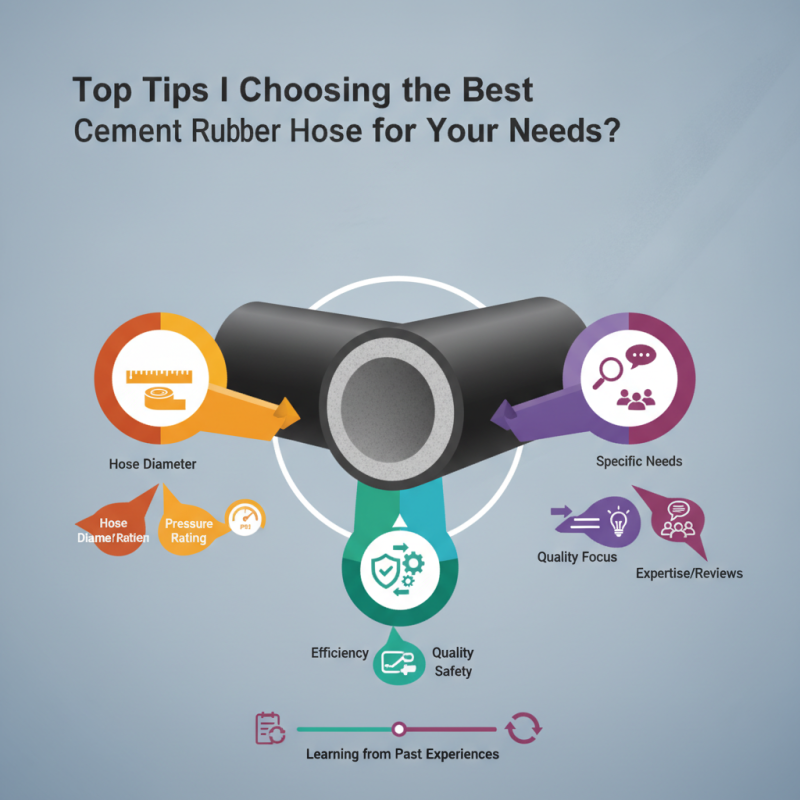
It's essential to consider factors like hose diameter, length, and pressure rating. Each application may require different specifications. Taking time to evaluate these details is not just beneficial; it can prevent costly mistakes. Users often overlook the importance of understanding their specific needs, which can lead to dissatisfaction.
Focusing on quality is vital. A reliable Cement Rubber Hose provides longevity and performance. However, it’s equally important to acknowledge the potential for misuse or selection errors. Reflecting on past experiences can guide better choices in the future. Engaging with experts or reading reviews can provide additional insight.
Understanding Cement Rubber Hoses: Composition and Functionality
Cement rubber hoses play a vital role in construction and industrial applications. Typically made from a blend of reinforced rubber and synthetic materials, these hoses withstand high abrasion and extreme conditions. Their flexibility allows for easy maneuvering on job sites, making them popular among contractors and engineers. Reports indicate that over 30% of hose failures are due to poor material selection or mismatched specifications.
The functionality of cement rubber hoses extends beyond transportation. They are engineered to handle high pressure, delivering materials like concrete efficiently. According to industry studies, hoses with improved tensile strength can significantly reduce the risk of rupture. Proper maintenance is crucial, yet many users neglect regular inspections. A lack of routine checks can lead to costly downtime and operational failures.
Still, choosing the right hose remains a challenge for many. It requires understanding not just the materials but also the specific needs of each project. Evaluating factors like length, diameter, and pressure ratings is essential. The wrong choice can lead to inefficiencies. Some users may opt for cheaper, generic options without realizing long-term consequences on safety and productivity.
Top Tips for Choosing the Best Cement Rubber Hose for Your Needs
| Dimension |
Material Composition |
Application |
Temperature Range |
Pressure Rating |
Weight |
| 1/2 inch |
Natural Rubber |
Construction |
-20°C to 70°C |
150 PSI |
2.5 kg |
| 3/4 inch |
Synthetic Rubber |
Agriculture |
-25°C to 65°C |
200 PSI |
3.1 kg |
| 1 inch |
Reinforced Rubber |
Industrial |
-20°C to 60°C |
250 PSI |
4.5 kg |
| 1.5 inch |
PVC and Rubber Blend |
Mining |
-30°C to 50°C |
300 PSI |
7 kg |
| 2 inch |
High-Strength Nylon |
Cement Transport |
-15°C to 55°C |
350 PSI |
9 kg |
Factors to Consider When Selecting a Cement Rubber Hose
When selecting a cement rubber hose, there are essential factors to consider. The material plays a crucial role in durability. High-quality rubber resists wear and can handle tough environments. Check for reinforced layers that enhance strength and flexibility. A hose that bends easily will make tasks smoother, reducing strain on equipment and personnel.
Evaluate the hose’s specifications related to pressure ratings. Choose a hose that can handle the maximum pressure your project requires. A mismatch can lead to leaks or bursts, causing frustration. Length is another important factor. Ensure the hose is long enough to reach the necessary distances without compromising on performance.
Finally, inspect the fittings and connections. Proper compatibility is key to effective operation. Incompatible fittings can create leaks, wasting both time and resources. Reflect on your past experiences with hoses—what worked and what didn’t. This insight will guide you toward making better choices in the future. Selecting the right hose requires careful consideration of these factors. It’s not a straightforward process, but it’s vital for success.
Comparing Different Types of Cement Rubber Hoses
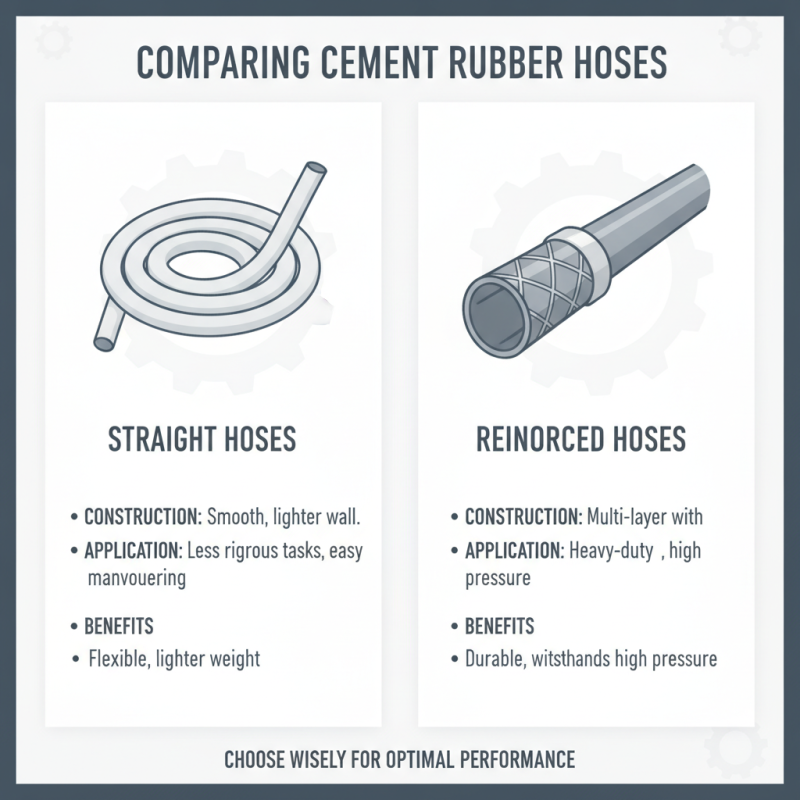
When choosing a cement rubber hose, understanding the different types is essential for optimal performance. Cement rubber hoses primarily vary in construction and application. The two most common types are straight and reinforced hoses. Straight hoses are typically lighter and easier to maneuver, suited for less rigorous tasks. In contrast, reinforced hoses are crafted for heavy-duty applications and withstand high pressures.
Industry reports indicate that reinforced hoses can handle pressures up to 150 PSI. This durability is crucial in construction settings where safety is a priority. Conversely, less robust models can become problematic under strain, potentially leading to leaks. One study found that 30% of hose failures were due to improper type selection, highlighting the importance of understanding specific needs.
Hoses are also evaluated based on their lining materials. Nylon and PVC linings offer different flexibilities and temperature resistances. Research shows that hoses with nylon linings provide enhanced resistance against cement abrasiveness. This distinction may affect longevity and performance in demanding applications. Evaluating your project’s requirements can prevent costly inefficiencies. Choosing the wrong hose may lead to increased downtime and maintenance costs.
Maintenance Tips for Prolonging the Lifespan of Your Hose
Maintaining the longevity of your cement rubber hose is crucial for optimal performance. Regular inspections should be a priority. Look for signs of wear, such as cracks or softness. Data show that properly maintained hoses can last up to 30% longer. The material, typically reinforced rubber, will deteriorate faster when exposed to harsh conditions. Ensure your hose is stored away from direct sunlight and extreme temperatures to minimize damage.
Cleaning the hose after use is equally important. A simple rinse with water can remove residue that promotes degradation. Some studies indicate that over 60% of hose failures are due to neglect in maintenance. Take time to check fittings and connections for leaks. Even small leaks can indicate bigger issues. It is often during use that many users realize they don’t know how to handle minor repairs.
However, having the proper tools on hand can empower you to address these issues quickly. Avoid using your hose in ways it wasn't designed for. Overloading it can result in early failure. Most manufacturers provide guidelines on the maximum pressure and temperature ratings for their products. Following these can prevent unnecessary wear. While it’s tempting to push limits, the risks far outweigh the short-term gains. Regular maintenance, awareness, and care can significantly enhance the lifespan of your rubber hose.
Safety Considerations When Using Cement Rubber Hoses
When using cement rubber hoses, safety is paramount. These hoses are often under pressure, making them prone to leaks or bursts. Always inspect hoses for damage before use. Look for cracks, abrasions, or any signs of wear. Small imperfections can lead to big problems, and a compromised hose can pose serious risks.
Proper handling and storage are crucial for safety. Avoid placing heavy objects on hoses, as this can cause kinks or ruptures. Store hoses in a cool, dry place away from sharp edges. Ensure any connections are secure to prevent accidental disconnections during operation. Regular maintenance is essential. Check connections and fittings regularly for any signs of deterioration.
Training workers on hose safety procedures is important. Many accidents happen due to improper use or lack of knowledge. Conducting regular safety drills can help keep everyone informed. Remember, safety gear is also critical. Protective eyewear and gloves can prevent injuries during use. Keeping safety at the forefront will enhance the longevity of your equipment while ensuring a secure working environment.
Safety Considerations When Using Cement Rubber Hoses