Leave Your Message
*Name Cannot be empty!
* Enter product details such as size, color,materials etc. and other specific requirements to receive an accurate quote. Cannot be empty

How to Choose China Best Corrugated Compensator Supplier?

Choosing China’s best Corrugated Compensator supplier requires more than comparing prices. It demands practical engineering judgment, verified manufacturing evidence, and careful attention to operating conditions. A reliable supplier should understand temperature cycles, pressure fluctuations, vibration, corrosion, and pipeline movement. These details directly affect bellows life.

Dr. Li Wei, a specialist in metallic expansion-joint design, states, “A compensator should be selected from operating data, not from appearance or price.” This principle is easy to overlook. A polished product can still contain weak welds, unsuitable alloys, or poor forming accuracy. Buyers should request material certificates, dimensional drawings, fatigue calculations, pressure-test records, and project references. Factory audits can reveal useful details, including welding areas, forming equipment, inspection tools, and traceability systems.

Look beyond the brochure.

The best Chinese supplier will ask specific questions before offering a design. What is the medium? What are the design temperature and pressure? How much axial, lateral, or angular movement is required? Is the system exposed to chloride, chemicals, or outdoor weather? A supplier that answers vaguely may not fully understand the application. However, even experienced buyers can miss installation conditions or assume standard dimensions will work. That mistake deserves reflection.

A sound evaluation also considers communication, delivery control, technical support, and after-sales responsibility. Certifications help, but they cannot replace engineering evidence. The right Corrugated Compensator supplier combines suitable materials, controlled production, documented testing, and honest technical discussion. Reliability is built through details, not promises.
How to Choose China Best Corrugated Compensator Supplier?

What Is a Corrugated Compensator and Where Is It Used?

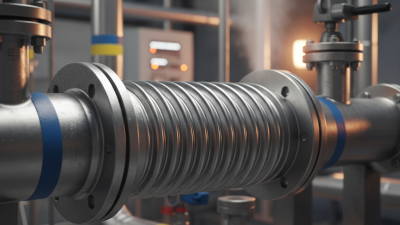
A corrugated compensator is a flexible pipe component with one or more thin metal bellows. Its corrugations allow controlled movement while maintaining a sealed flow path. The component absorbs thermal expansion, vibration, pressure-related movement, and small installation errors.

It is commonly installed in steam lines, hot-water systems, chemical processing equipment, exhaust ducts, and building HVAC pipelines. In a long steel pipe, temperature changes can create serious stress at elbows, valves, and equipment nozzles. A properly designed compensator reduces that stress.

It can also limit vibration from pumps and compressors. However, it is not a universal cure. Excessive movement, poor alignment, or unexpected pressure can shorten its service life.

When choosing a China-based supplier, examine engineering evidence rather than catalog appearance. Request material certificates, weld procedure records, dimensional drawings, and fatigue calculations. The supplier should explain pressure, temperature, movement direction, cycle life, and guide requirements. Factory inspections and hydrostatic or leak testing add useful confidence. Traceable production records matter.

Pay close attention to bellows thickness and forming quality. Small wrinkles, uneven spacing, or rough welds may become failure points. A supplier should also provide installation instructions and inspection criteria. Site conditions are often described imperfectly, so confirm actual pipe movement and support spacing before ordering. A low purchase price can hide replacement costs, delayed commissioning, or unsafe stress transfer. Supplier selection requires technical review, not only online comparisons.
Which Technical Standards Should Chinese Suppliers Meet?

How to Choose China Best Corrugated Compensator Supplier?

A reliable Chinese supplier should design corrugated compensators against the project’s real conditions. Key data includes pressure, temperature, medium, movement, connection size, and expected service cycles. For Chinese projects, GB/T 12777 is an important reference for metal expansion joints. For international applications, suppliers may also use EJMA guidelines or EN 14917, depending on the contract and destination market. These references should be stated clearly, not mentioned vaguely.

Ask for design calculations before placing an order. The documents should show bellows thickness, material grade, spring rate, fatigue life, and stability checks. A competent supplier should also explain whether the unit needs liners, covers, tie rods, or flow guides. Stainless steel certificates must provide heat numbers and chemical composition. Welding should follow qualified procedures, with trained operators and suitable non-destructive testing. Small details matter.

Testing should match the service risk. Pressure testing, leak testing, dimensional inspection, and movement verification are common requirements. Request records linked to the actual serial number. A polished certificate is not proof by itself. In practical sourcing, I would compare drawings, test reports, and finished dimensions together. They sometimes disagree. That is a warning. No single standard fits every pipeline, and a supplier that promises unlimited cycles deserves careful questioning.

How to Choose China's Best Corrugated Compensator Supplier?

Technical standards coverage for metallic bellows expansion joints

The chart compares the direct scope of major technical references used when evaluating Chinese corrugated compensator suppliers. A value of 1 means the reference directly addresses that area; 0 means it is not the primary standalone reference for that area. GB/T 12777 and EN 14917 are specifically focused on metallic bellows expansion joints, while EJMA provides specialized engineering guidance. ASME B31.3 mainly governs process piping design, fabrication, examination, and testing, so it should be used together with a bellows-specific standard.

Key references: GB/T 12777, Metallic bellows expansion joints; EN 14917, Metallic bellows expansion joints for pressure applications; EJMA Standards for Metal Expansion Joints; ASME B31.3, Process Piping.

How to Evaluate Supplier Quality, Materials, and Manufacturing Capacity?

Choosing China’s best corrugated compensator supplier requires more than comparing prices. Start with the supplier’s quality system, inspection records, and engineering experience. Ask for material certificates, welding procedures, and test reports from recent projects. A reliable supplier should explain pressure, temperature, movement, and fatigue calculations clearly.

Inspect the materials closely. Stainless steel grades such as 304L or 316L may suit different operating conditions. The supplier should provide heat numbers and maintain traceability from raw sheet to finished bellows. Check forming quality around each corrugation. Uneven waves, sharp marks, or thin areas can reduce service life. Welds need visual inspection and suitable nondestructive testing. Request hydrostatic or leak-test records when applicable.

Manufacturing capacity also matters. Review forming equipment, automatic welding systems, tooling control, and in-house testing facilities. Ask how many compensators the factory can produce monthly without sacrificing inspection time. A factory tour, live video audit, or third-party inspection can reveal more than a polished brochure. Request a sample with dimensional data before approving mass production. Small details matter.

Do not trust impressive claims alone. Some suppliers provide complete documents but weak fatigue analysis. Others have strong workshops but inconsistent communication. That is where evaluation becomes difficult. Compare technical responses, not only quotations. Check whether the supplier can manage design changes, urgent replacements, and long-term traceability. A dependable partner admits limitations and corrects mistakes with documented actions.

How to Choose China Best Corrugated Compensator Supplier? - How to Evaluate Supplier Quality, Materials, and Manufacturing Capacity?

Supplier Evaluation Matrix for Metal Corrugated Compensators and Expansion Joints

Evaluation Dimension What to Verify Objective Evidence to Request Practical Benchmark or Acceptance Point Weight
Product Quality Dimensional accuracy, weld quality, bellows forming quality, surface condition, and consistency between production batches. Approved drawings, inspection plans, dimensional inspection reports, weld inspection records, and representative product samples. Critical dimensions and movement capacity should conform to the approved drawing and the project specification. There should be no visible cracks, incomplete welds, excessive dents, or unstable convolutions. 20%
Material Selection Compatibility of bellows, liner, flanges, tie rods, and other wetted or structural parts with the medium, temperature, pressure, and corrosion environment. Material certificates, heat numbers, chemical composition reports, mechanical-property reports, and material traceability records. Common stainless-steel options include 304/304L and 316/316L; the final grade must be selected according to corrosion conditions and the approved design. Material certificates should be traceable to the supplied components. 15%
Design Capability Ability to calculate pressure thrust, thermal movement, fatigue life, spring rate, guide requirements, anchors, liners, and allowable installation movement. Design calculations, bellows geometry, movement data, pressure and temperature limits, installation instructions, and engineering review records. Design data should be project-specific rather than copied from a general catalogue. The supplier should clearly state axial, lateral, and angular movement limits and the required pipeline support arrangement. 15%
Manufacturing Process Control of forming, welding, heat treatment, machining, assembly, cleaning, and protective finishing. Process flow chart, welding procedure specifications, welder qualifications, equipment list, process-control records, and nonconformance procedures. Manufacturing steps should be documented and repeatable. Forming and welding equipment must be suitable for the specified bellows size, material thickness, and production volume. 15%
Testing and Inspection Pressure tightness, dimensional compliance, movement performance, weld integrity, and material verification. Hydrostatic or pneumatic test records, leak-test reports, dye-penetrant or other agreed NDE reports, dimensional reports, and calibration certificates. Testing should follow the purchase specification and applicable project standards. Pressure and leak-test conditions must identify the test medium, pressure, duration, acceptance criteria, and calibrated equipment used. 15%
Production Capacity Available forming diameter, maximum length, welding capability, machining resources, lead time, and ability to handle repeat orders. Equipment register, current production schedule, monthly capacity statement, sample lead-time records, and factory audit results. The supplier should demonstrate capacity for the required size range and delivery quantity without subcontracting critical processes unless this is disclosed and approved in advance. 8%
Quality Management Control of incoming materials, process inspection, final release, corrective actions, and document retention. Valid ISO 9001 certificate, internal audit records, inspection and test plans, corrective-action reports, and quality manuals. Certification should be issued by an accredited certification body and should cover the relevant manufacturing scope. A certificate alone should not replace an audit of actual production controls. 5%
Traceability Ability to trace raw material, welding, inspection, and final product information through the serial number or purchase-order reference. Heat-number transfer records, weld maps, serial-number system, material certificates, inspection reports, and packing-list references. Each compensator should be traceable to its material certificates and final inspection records. Marking should remain identifiable during storage, installation, and commissioning. 4%
Technical Documentation Completeness and clarity of drawings, data sheets, installation instructions, operation limits, maintenance guidance, and shipping documents. Approved general arrangement drawing, data sheet, bill of materials, test dossier, installation manual, packing list, and certificate package. Documents should match the supplied configuration, revision, serial numbers, material grades, design conditions, and test results. Installation guidance should address shipping restraints, guides, anchors, and alignment. 3%
Total Evaluation Weight 100%

Scoring method: Rate each dimension from 1 to 5, multiply the rating by the assigned weight, and compare the weighted totals. Final acceptance should also confirm compliance with the applicable project specification, piping code, pressure rating, temperature range, movement requirements, and local regulatory requirements.

What Certifications and Testing Documents Should You Request?

When choosing a China corrugated compensator supplier, request documents that match your service conditions, not just attractive certificates. Start with a valid ISO 9001 certificate and check its certification scope. It should cover manufacturing, welding, or pressure equipment activities. ISO 14001 may support environmental management, but it does not prove product quality. Ask for the certificate number, issuing body, validity date, and factory address. A certificate without matching details deserves careful review.

Request material certificates for bellows, flanges, liners, and weld consumables. EN 10204 3.1 records should identify heat numbers and chemical composition. Compare these numbers with markings on the delivered parts. Small details matter. For welded assemblies, request welder qualifications, welding procedure specifications, and procedure qualification records. Ask whether stainless steel grades were verified through positive material identification. This check can prevent an expensive mismatch.

Testing documents should include dimensional inspection, leak testing, pressure testing, and, where applicable, dye penetrant or radiographic reports. For repeated movement, request cycle-test data showing temperature, pressure, stroke, and cycle count. The report should identify instruments and calibration dates. Do not accept a generic test sheet with no serial number. That is a weakness. I would also request a traceable inspection and test plan before production. Suppliers sometimes provide impressive paperwork but weak traceability. Recheck critical points through photos, video inspection, or an independent inspector when project risk is high.

How to Compare Pricing, Delivery, Warranty, and After-Sales Support?

Choosing China’s best corrugated compensator supplier requires more than comparing the lowest quotation. Ask each supplier to price identical specifications: material grade, diameter, pressure, temperature, movement, cycle life, flange standard, and inspection scope. A cheaper unit may use thinner bellows or exclude hydrostatic testing. EJMA design guidance and EN 14917 provide useful technical benchmarks for bellows expansion joints. Request calculation sheets, weld procedures, material certificates, and test records before accepting a price.

Delivery deserves measurable terms. The 2023 UNCTAD Review of Maritime Transport reported a 3.7% decline in global containerized trade during 2022, showing how unstable logistics can affect purchasing plans. Compare production lead time, inspection time, export packing, and shipping options separately. Ask for a milestone schedule, not only “delivery in 30 days.” Include penalties or corrective actions for unreasonable delays. Details matter.

Warranty terms should state coverage, duration, installation conditions, and response time. A reliable supplier should explain whether failures involve fatigue, corrosion, incorrect alignment, or operating overload. After-sales support is stronger when engineers can review drawings, provide installation guidance, and issue a written root-cause report. ISO’s 2022 Survey recorded more than one million ISO 9001 certificates worldwide, but certification alone cannot prove product quality. I have seen polished certificates hide weak communication. Test the supplier with technical questions before placing a large order. A fast, specific reply is valuable evidence.