Leave Your Message
*Name Cannot be empty!
* Enter product details such as size, color,materials etc. and other specific requirements to receive an accurate quote. Cannot be empty

7 Tips for Choosing the Right Cement Rubber Hose?

Choosing the right Cement Rubber Hose is a practical decision that affects safety, uptime, and operating costs. Cement slurry may look simple, but it carries abrasive particles through demanding pressure conditions. A hose that performs well on one job may fail early on another. The difference often comes from details such as inner-tube quality, reinforcement layers, working pressure, and bend radius. Small mistakes can become expensive quickly.

This guide examines seven useful considerations for selecting a Cement Rubber Hose with greater confidence. It focuses on real site conditions, not only catalog descriptions. Check the slurry temperature, delivery distance, pump pressure, and connection method before comparing products. A thick rubber tube may resist wear, but it may also be heavy and difficult to position. Flexible designs can improve handling, yet they may require stricter pressure limits. Experience shows that no single hose suits every cement application. That point is easy to overlook.

Reliable manufacturers should provide pressure ratings, material information, inspection records, and clear maintenance guidance. Look for evidence from technical testing and similar construction environments. Ask how the hose performs around sharp bends, vibrating pumps, and frequent coupling changes. These details often reveal more than a polished product image. It is also wise to inspect hoses regularly for bulges, cracks, exposed reinforcement, or unusual stiffness. Even careful selection cannot correct poor installation or neglected inspections. This guide may not answer every site-specific question, but it offers a sound starting point. Better decisions come from matching specifications with actual working conditions.
7 Tips for Choosing the Right Cement Rubber Hose?

Define the Working Conditions for a Cement Rubber Hose

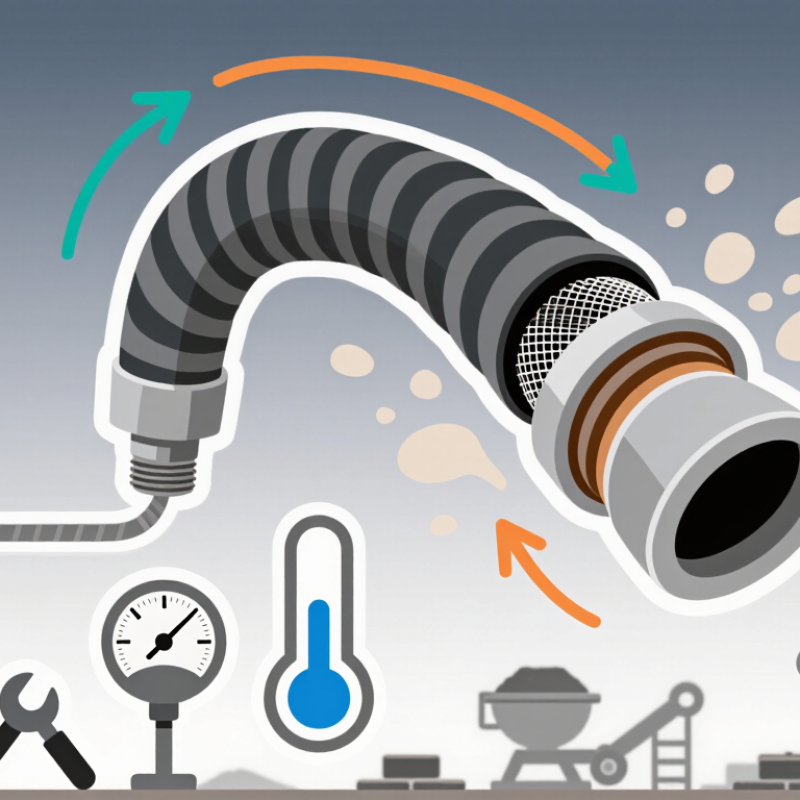
Choosing the right cement rubber hose begins with defining its working conditions. A hose carrying dry cement faces different stress from one handling wet slurry. Record the material, flow rate, pressure, temperature, and delivery distance. Do not rely on a general description such as “cement service.” Details matter. I once treated pressure as the main concern. That assumption was too simple. Dry powder can create severe internal abrasion, even at moderate pressure.

Check whether the material is dry, damp, mixed, or chemically active. Fine particles can act like sandpaper against the inner tube. Slurry adds weight and may settle during pauses. Measure normal pressure and surge pressure separately. The hose should tolerate the highest realistic pressure, not only the average reading. Inspect the pump cycle, because repeated pulses can fatigue the reinforcement. Heat from the material, sunlight, and nearby equipment may combine. Leave room for movement, but never force the hose below its minimum bend radius.

Map the route before ordering. Mark vertical lifts, tight corners, couplings, and areas exposed to dragging. Extra length is not always safer; it can kink or whip. Choose construction suited to abrasion, flexibility, and electrical requirements. If static charge may build, confirm grounding with a qualified technician. Plan inspection points near bends and connections. Look for blisters, cuts, soft spots, and exposed reinforcement. Record cleaning methods and idle time. My early checks missed shutdown conditions. That mistake showed me that a hose must fit the whole job, not just the running phase.

Define the Working Conditions for a Cement Rubber Hose

Compare the typical temperature, working pressure, and conveyed particle size for common cement-handling applications before selecting hose construction, reinforcement, and inner-tube abrasion resistance.

Reference values are typical engineering screening conditions, not universal hose ratings. Always confirm the required working pressure, temperature range, particle size, bend radius, and safety factor against the final hose specification.

Match Hose Materials to Cement, Abrasion, and Pressure Requirements

7 Tips for Choosing the Right Cement Rubber Hose

Cement is not a gentle material. The USGS Mineral Commodity Summaries 2024 estimates global cement production reached about 4.1 billion metric tons in 2023. That volume reflects severe hose exposure in pumping and transfer systems. Match the tube material to the slurry, not just the hose diameter. Abrasion-resistant natural or synthetic rubber often suits dry cement and dense mortar. Chemical exposure may require a different elastomer. Check compatibility data carefully.

Pressure selection needs real operating records. Measure working pressure, pump pulsation, temperature, and possible blockage pressure. A hose rated only for average pressure can fail during surges. Use the highest expected pressure, then apply the safety factor required by the applicable engineering standard. ISO 1307 helps define hose dimensions and tolerances, while ISO 4649 provides a method for comparing rubber abrasion resistance through volume loss. Test results matter more than attractive catalog wording.

Look for reinforced construction and a smooth internal bore. Fewer internal steps can reduce turbulence and cement buildup. Inspect the cover for cuts, exposed reinforcement, and hardened sections. Replace it early.

Do not ignore installation.

A sharply bent hose may collapse internally, even within its pressure rating. I have seen teams choose thicker walls but overlook bend radius and coupling alignment. That decision looked robust, yet it increased stress near the ends. Review site conditions, cleaning methods, and inspection intervals together. The right material is only part of the answer.

Select the Correct Hose Size, Length, and Connection Type

7 Tips for Choosing the Right Cement Rubber Hose

Select the Correct Hose Size, Length, and Connection Type

Tip 1: Measure the required inner diameter, not the outer diameter. A cement hose that is too narrow increases friction and may slow pumping. An oversized hose can reduce velocity and encourage material settlement. Match the diameter with the pump outlet, delivery rate, and cement mixture.

Tip 2: Choose a practical length. Extra length gives flexibility around scaffolding and mixers, but it also adds weight and pressure loss. Measure the actual route, including bends and vertical rises. Leave only enough slack for movement. Too little slack creates tension. Too much becomes difficult to handle.

Tip 3: Confirm the working pressure and pressure surges. Cement flow can create sudden loads when a pump starts or stops. Select a hose with a suitable safety margin, based on verified technical data. Guessing here is a poor shortcut.

Tip 4: Match the connection type exactly. Flanged, threaded, and quick-coupling ends are not automatically interchangeable. Check the hose bore, fitting dimensions, sealing surface, and locking method. A mismatched connection may leak even when the hose itself is well selected.

Tip 5: Check the bend radius before installation. Sharp bends can flatten the bore and damage reinforcement. Use elbows or supports where the route changes direction.

Tip 6: Consider abrasion resistance. Cement particles behave like sandpaper inside the tube. Inspect worn sections regularly.

Tip 7: Recheck the assembly after installation. Tight connections, correct alignment, and clean sealing surfaces matter. This final check is often rushed, and that is where small errors become expensive.

Check Flexibility, Reinforcement, and Safety Standards

Choosing the right cement rubber hose starts with flexibility, reinforcement, and safety standards. A hose should bend around equipment without flattening or forming sharp kinks. Hold a sample in a tight curve, then inspect whether the tube springs back evenly. Do not guess. A stiff hose may resist movement but place heavy stress on couplings.

Reinforcement deserves close attention. Look for strong textile layers or steel wire designed for the hose’s working pressure and vacuum conditions. Check the pressure rating against the pump, compressor, and expected surges. Measure the hose length under normal installation, not when stretched across the floor. A slightly longer hose often reduces pulling force and joint damage. The outer cover should resist abrasion from cement dust, concrete edges, and repeated dragging. I once selected a hose mainly for its high pressure rating. It failed early because its cover wore through. That mistake was expensive.

Safety depends on more than a printed pressure number. Confirm the hose assembly meets applicable industry standards, testing requirements, and local workplace rules. Ask for documentation covering burst testing, material compatibility, temperature limits, and coupling retention. Inspect both ends for loose clamps, damaged threads, or exposed reinforcement. Static control may also matter when dry powders move quickly through the line. Mark inspection dates on the hose, and replace it after visible damage or repeated pressure shocks. Standards help, but field conditions can still expose weak assumptions.

7 Tips for Choosing the Right Cement Rubber Hose? – Check Flexibility, Reinforcement, and Safety Standards

Tip Selection Dimension What to Check Practical Benchmark Recommended Verification Why It Matters
1 Confirm the hose size Match the hose inside diameter to the conveying line, pump outlet, and coupling size. Check whether the material is dry cement powder, wet cement slurry, mortar, or abrasive aggregate. Use a nominal inside diameter that avoids sharp reductions in flow area. The actual ID tolerance should be checked against the applicable hose specification, such as ISO 1307 where relevant. Measure the connection size, confirm the required flow rate, and review the hose ID tolerance and coupling dimensions before ordering. Correct sizing reduces pressure loss, turbulence, blockage, and premature wear at the hose ends.
2 Evaluate flexibility and bend radius Check the minimum bend radius, hose weight, kink resistance, and flexibility at the lowest expected operating temperature. Avoid bending near couplings. The stated minimum bend radius must be equal to or smaller than the installation radius. Do not use a hose below its published bend-radius limit or force it into a sharp bend. Compare the hose data sheet with the actual routing. Inspect the hose while pressurized and confirm that it does not flatten, kink, or twist. Adequate flexibility improves handling and prevents reinforcement damage, flow restriction, and localized fatigue.
3 Select suitable reinforcement Review the number and type of reinforcement layers, such as textile plies, steel cord, or helix wire. Consider working pressure, vacuum exposure, pulsation, and external crushing forces. For pressure service, select a construction with a published maximum working pressure and proof-test rating. For suction or vacuum service, use a hose specifically designed with anti-collapse reinforcement. Verify working pressure, proof pressure, vacuum rating, burst pressure, and reinforcement construction in the technical documentation. The reinforcement carries pressure loads and helps the hose resist collapse, elongation, and mechanical impact.
4 Prioritize abrasion resistance Cement, sand, gravel, and aggregate can rapidly wear the tube. Check the tube compound, wall thickness, abrasion test data, and resistance to erosion at bends and reducers. For abrasive slurry or aggregate service, choose a purpose-designed abrasive-material hose. A lower abrasion-loss value in a comparable test indicates better wear resistance; ISO 4649 may be used where applicable. Request abrasion-loss results, inspect the inner tube regularly, and rotate the hose when the design permits even wear distribution. Improved abrasion resistance extends service life and lowers the risk of sudden material release.
5 Check pressure and temperature ratings Consider continuous pressure, surge pressure, pump pulsation, slurry density, ambient temperature, and the temperature of the conveyed material. The maximum working pressure must exceed the highest normal and transient system pressure. Never use the hose above its published temperature range; pressure capability can decrease as temperature rises. Record normal and peak pressure, measure operating temperature, and compare both values with the hose rating. Hydrostatic testing may be performed according to ISO 1402 or the applicable product standard. Correct ratings help prevent burst, delamination, hardening, softening, and premature aging.
6 Verify chemical and environmental compatibility Check resistance to cement water, alkaline slurry, cleaning chemicals, oils, ultraviolet exposure, ozone, moisture, and outdoor storage conditions. The tube and cover compound must be rated for the actual cement mixture and cleaning process. Fluid compatibility should be assessed using the specific concentration and operating temperature. Provide the hose supplier with the material composition, pH, concentration, temperature, and cleaning chemicals. Review resistance data using ISO 1817 where applicable. Compatibility prevents swelling, cracking, hardening, loss of adhesion, and contamination of the conveyed material.
7 Confirm safety standards and maintenance controls Review hose identification, traceability, coupling retention, electrical properties where required, inspection procedures, and replacement criteria. Use protective restraints for pressurized hose assemblies when the risk assessment requires them. The assembly should have clearly marked size, pressure, temperature, and manufacturing information. Testing and inspection should follow the applicable hose standard and site safety procedure. Check hydrostatic test records, visual condition, coupling security, cover cuts, exposed reinforcement, bulges, leaks, and date-based replacement requirements. Use ISO 3861 for sand or slurry discharge hose applications where applicable, together with local regulations. Documented inspection and compliant assembly practices reduce hose-whip, burst, leakage, dust exposure, and unplanned downtime.

Note: Pressure, temperature, bend-radius, vacuum, and abrasion values vary by hose construction and application. Always use the published rating for the complete hose assembly, including couplings, and select the applicable national or international safety requirements for the installation.

Compare Service Life, Maintenance Needs, and Total Cost

Choosing a cement rubber hose requires more than checking its purchase price. In field inspections, I have seen cheap hoses fail early at bends and couplings. Tip 1: Match the hose to cement type, pressure, temperature, and particle size. Tip 2: Check the inner tube thickness and reinforcement. A stronger tube usually resists abrasive slurry longer. Tip 3: Confirm the minimum bend radius. Forced bends create hidden damage.

Service life depends heavily on daily handling. Tip 4: Inspect the hose before every shift for blisters, exposed reinforcement, cracks, and soft spots. Tip 5: Flush cement residue after use, especially near the ends. Dried material becomes a hard internal obstruction. Tip 6: Rotate the hose regularly to distribute wear. This small practice can extend usable life, though it is easy to overlook. Record pressure changes and repair dates. Records reveal patterns.

Total cost includes labor, downtime, replacement couplings, and disposal. Tip 7: Compare expected service life instead of unit prices alone. A hose lasting twelve months may cost less than two hoses lasting five months each. Still, service-life estimates are not perfect. Actual results depend on routing, cleaning, storage, and operator habits. Ask for test data, compatibility details, and recommended inspection intervals. A practical trial under real site conditions can expose problems that a catalog never shows.