Choosing reliable equipment for sand removal begins with understanding real operating conditions, not attractive catalog claims. This guide examines the Top 10 Cyclone Desander Manufacturers and Suppliers serving oil and gas, mining, water treatment, and industrial processing. Each company is considered through practical criteria, including design experience, material quality, separation performance, customization, testing, technical support, and delivery capability.
Details matter. A desander handling abrasive quartz sand needs different protection from one treating cleaner process water. Inlet pressure, particle size, flow rate, and temperature can change performance significantly. Some suppliers provide compact skid systems, while others focus on engineered vessels, hydrocyclone assemblies, or replacement liners. Field experience can reveal issues that brochures rarely mention, such as pressure loss, difficult maintenance access, or unstable performance during changing flow conditions.
This comparison aims to support informed purchasing decisions. It does not suggest that one supplier fits every project. No universal best choice exists. Product data should be checked against verified test results, reference installations, certifications, warranty terms, and after-sales service. Supplier rankings can also change as technology, regional support, and customer feedback develop. That limitation deserves attention.
The selected manufacturers and suppliers are presented with a balanced view of their capabilities and potential advantages. Readers should request current specifications and application guidance before approving a final design. A careful review can prevent costly oversizing, premature wear, and avoidable downtime. Small details matter. Reliability is built before installation.
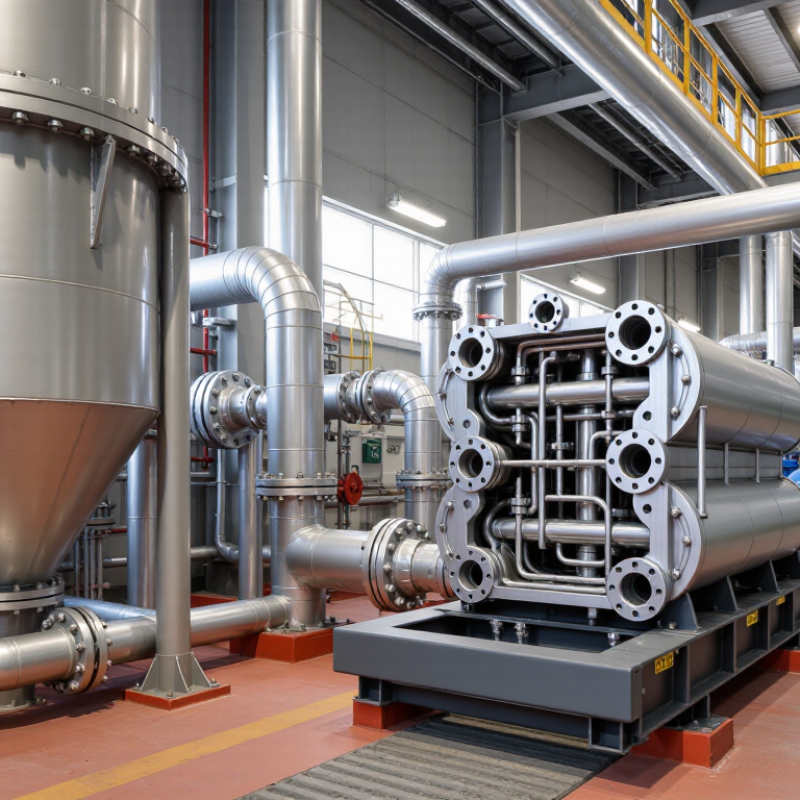
A cyclone desander removes sand and other solid particles from flowing water, drilling fluids, or process liquids. It usually has no moving parts. Instead, the unit uses pressure and centrifugal force to separate heavier particles from the liquid.
Inside the chamber, fluid enters through a tangential inlet and begins spinning rapidly. The rotating flow pushes dense particles toward the cone wall. These particles lose momentum and fall through the underflow outlet. Cleaner liquid moves upward through the central vortex and leaves through the overflow outlet.
Particle size, density, pressure, and flow rate all affect performance. A cyclone desander is not a magic filter. Very fine particles may remain in the liquid, especially when operating conditions change. Experienced operators check pressure readings and inspect discharge patterns before trusting the result.
Tips: Select equipment according to flow rate, solids concentration, and required separation size. Ask suppliers for tested performance data, material specifications, and maintenance guidance. Check whether the cone lining suits the liquid and abrasive conditions. Small details matter. Oversizing can reduce separation efficiency, while undersizing may create excessive pressure loss. Regularly inspect the apex, inlet, and collection vessel. In practice, maintenance schedules often need adjustment because real solids are less uniform than laboratory samples. Reliable manufacturers and suppliers should explain these limitations clearly, not promise perfect separation.
Cyclone desanders remove abrasive sand before it reaches valves, separators, pumps, and injection equipment. Their key feature is centrifugal separation. Tangential inlets create a high-speed vortex, while heavier particles move toward the collection chamber. A 2023 review in Separation and Purification Technology reports that well-designed cyclone systems can remove roughly 80–95% of particles larger than 10 micrometres. Results still depend on density, pressure, flow rate, and particle shape.
For upstream applications, buyers should examine pressure-drop data, erosion-resistant liners, drain capacity, and instrument connections. Compact skid units suit wellhead testing and temporary production. Larger vessels support continuous sand management in gas processing and produced-water systems. API RP 14C supports practical safety-system evaluation, but it does not replace project-specific engineering. Real wells are less predictable. Sand can arrive in sudden slugs, not neat laboratory streams. That weakness is often underestimated.
Tips:
Ask suppliers for field test data, not only catalog efficiency. Confirm the minimum particle size, expected solids loading, and maximum operating pressure. Request inspection photos of the vortex finder and wear zones. The U.S. Department of Energy’s industrial equipment guidance also emphasizes pressure-loss control, because unnecessary resistance increases operating energy. A small error in flow assumptions can shorten equipment life. Allow room for maintenance, even when the drawings look efficient.
When evaluating cyclone desander manufacturers and suppliers, examine evidence before polished brochures. Request particle-removal curves, pressure-drop data, capacity limits, and test conditions. A reliable supplier should explain whether results use sand, glass beads, or field solids. Those materials behave differently. DNV-RP-O501 highlights erosion risks from produced sand, so ask for erosion calculations and inspection intervals. Also verify material certificates, welding records, and quality-system evidence such as ISO 9001 certification.
Hydraulic claims need careful review. API RP 14E commonly references a 100 ft/s erosional-velocity guideline for continuous service. However, the guideline depends on fluid density, solids loading, geometry, and operating conditions. It is not a universal guarantee. Compare the supplier’s calculations with your actual flow range, temperature, pressure, and particle-size distribution. A unit that performs well at one flow rate may lose efficiency during a production surge. Field experience often exposes this gap.
Tips: Ask for three recent reference projects with similar fluids and pressures. Check whether spare parts remain available after installation. Require a witnessed factory test when practical. Review maintenance access, drain design, and sand collection volume. Be cautious when a supplier avoids sharing test uncertainty. A perfect curve may look impressive, but real wells rarely behave perfectly. Cross-check every claim against independent engineering data and the latest operating records.
An anonymized technical comparison based on common cyclone desander specifications, application coverage, documentation, and supplier evaluation criteria.
| Rank | Supplier Profile | Primary Market Region | Cyclone Desander Configuration | Typical Inlet Size | Typical Pressure Range | Separation Particle Range | Construction Materials | Common Applications | Documentation and Testing | Customization Capability | Evaluation Score |
|---|---|---|---|---|---|---|---|---|---|---|---|
| 1 | Supplier Profile 01 | North America | Horizontal cyclone package with automatic solids discharge | 2–16 in | 150–1,500 psi | 10–150 microns | Carbon steel, 316 stainless steel, duplex steel | Oil and gas, produced water, gas transmission | Hydrostatic testing, material certificates, performance curves | High | 9.4/10 |
| 2 | Supplier Profile 02 | Western Europe | Modular liquid cyclone skid with replaceable liners | 2–12 in | 10–100 bar | 15–250 microns | Carbon steel, stainless steel, ceramic-lined options | Water treatment, mining, process industries | Pressure test records, drawings, operating manuals | High | 9.2/10 |
| 3 | Supplier Profile 03 | East Asia | Compact cyclone desander vessel for wellhead service | 2–10 in | 150–1,000 psi | 20–300 microns | Carbon steel, 304/316 stainless steel | Well testing, drilling fluids, gas processing | Dimensional inspection, pressure testing, welding records | High | 9.0/10 |
| 4 | Supplier Profile 04 | Middle East | High-flow multicyclone system with parallel vessels | 4–24 in | 150–1,500 psi | 25–500 microns | Carbon steel, low-temperature steel, stainless steel | Pipeline protection, gas gathering, upstream production | Flow calculations, NDE reports, pressure test certificates | Medium to high | 8.9/10 |
| 5 | Supplier Profile 05 | South Asia | Standard liquid-solid cyclone separator | 1.5–12 in | 6–40 bar | 20–500 microns | Mild steel, carbon steel, stainless steel | Industrial water, irrigation, sand removal | General arrangement drawings, material declarations, factory testing | Medium | 8.6/10 |
| 6 | Supplier Profile 06 | Southeast Asia | Skid-mounted cyclone package with manual blowdown | 2–16 in | 10–80 bar | 30–350 microns | Carbon steel, stainless steel, rubber-lined steel | Offshore utilities, water injection, process facilities | Layout drawings, coating reports, leak testing | Medium to high | 8.4/10 |
| 7 | Supplier Profile 07 | Eastern Europe | Heavy-duty cyclone unit with abrasion-resistant internals | 2–14 in | 10–100 bar | 25–400 microns | Carbon steel, stainless steel, ceramic or carbide liners | Mining, abrasive slurry, mineral processing | Wear testing, hardness reports, dimensional inspection | Medium | 8.2/10 |
| 8 | Supplier Profile 08 | Latin America | Compact process cyclone with quick-access cleanout | 1.5–10 in | 6–30 bar | 30–600 microns | Carbon steel, stainless steel, polymer-lined components | Agriculture, municipal water, food-process utilities | Basic pressure testing, product drawings, maintenance instructions | Medium | 7.9/10 |
| 9 | Supplier Profile 09 | Africa | Containerized cyclone desander package for remote sites | 2–12 in | 10–70 bar | 40–500 microns | Carbon steel, stainless steel, corrosion-resistant coatings | Remote oilfields, boreholes, temporary water systems | Factory acceptance testing, packing lists, installation guides | High | 7.7/10 |
| 10 | Supplier Profile 10 | Oceania | Small-footprint cyclone separator for packaged systems | 1–8 in | 5–25 bar | 50–700 microns | Stainless steel, carbon steel, engineered polymers | Mining water, desalination pretreatment, industrial utilities | Material declarations, dimensional drawings, leak testing | Medium | 7.5/10 |
Note: The supplier names are intentionally anonymized. Technical ranges represent common market configurations and should be verified against the supplier’s current datasheet, design calculations, certifications, and project-specific operating conditions before purchase.
The top 10 cyclone desander manufacturers and suppliers are not chosen by advertising alone. Practical performance matters more. Experienced buyers inspect separation efficiency, pressure drop, flow range, and wear resistance before placing an order. A reliable desander should remove abrasive sand without creating unstable pressure changes. In field service, operators often compare inlet pressure readings with outlet clarity. Small differences can reveal poor internal geometry or incorrect sizing.
Leading manufacturers usually provide complete technical drawings, material certificates, and test data. They should explain whether the body uses carbon steel, stainless steel, or ceramic-lined components. This choice affects service life in abrasive applications. Suppliers also need responsive engineering support. Installation guidance, spare-part availability, and maintenance instructions can prevent costly downtime. Ask for results from conditions similar to yours. Laboratory figures alone may not reflect actual field performance.
The strongest suppliers offer flexible configurations for different flow rates and particle sizes. They may supply single units, parallel systems, automatic sand discharge equipment, or compact skid packages. However, no ranking is perfect. A supplier may perform well in one process and disappoint in another. I would verify references, inspect quality records, and review warranty terms carefully. Clear communication is essential. A polished brochure cannot replace a measured test. During evaluation, record pressure loss, sand collection volume, inspection frequency, and cleaning time. These details support a more dependable purchasing decision.
Choosing among the top 10 cyclone desander manufacturers and suppliers requires more than comparing catalog prices. Grand View Research valued the global industrial filtration market at approximately USD 31.5 billion in 2023, showing strong demand for reliable separation equipment. Yet market growth does not guarantee better field performance.
Product quality starts with verified materials, weld inspection, pressure testing, and stable performance under changing flow rates. Experienced buyers should request test data for sand size, removal efficiency, pressure loss, and allowable operating temperature. CFD analysis can improve inlet design, while replaceable ceramic or hardened-steel liners may reduce erosion. Small details matter. A compact vessel can still fail when solids loading is underestimated.
Service often separates a dependable supplier from a cheap one. Ask about commissioning support, spare-part availability, inspection intervals, and emergency response times. MarketsandMarkets identifies lifecycle support and process reliability as major purchasing factors in industrial separation equipment. Value should therefore include energy use, downtime, disposal costs, and maintenance labor. A lower purchase price may become expensive after repeated shutdowns. However, efficiency claims are not always comparable; some suppliers test with clean water, while field fluids contain oil, gas, irregular particles, and changing velocities. That weakness deserves scrutiny. A transparent supplier should provide application-specific calculations, traceable test records, and realistic limitations rather than polished promises.
Procurement criteria for comparing product quality, technology, service, and value
This neutral benchmark uses an indicative purchasing-weight model rather than company-specific performance claims. Product quality and pressure-rated reliability are prioritized, followed by separation technology, after-sales service, and total lifecycle value. Actual supplier evaluations should verify certified performance data, materials, operating limits, delivery capability, spare-parts support, and application references.