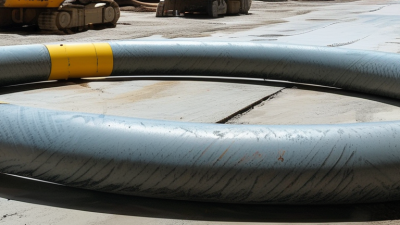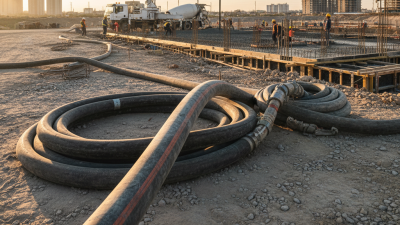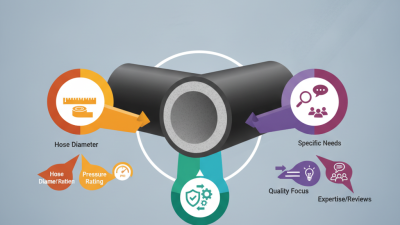
Choosing the right Concrete Delivery Hose in 2026 starts with the pour, not the product label. A short end hose gives crews precise control around forms and congested reinforcement. Longer delivery sections move concrete across the jobsite. Reinforced hose constructions handle pumping pressure, while abrasion-resistant inner linings can better withstand gritty mixes. The right choice depends on pressure, hose diameter, aggregate size, bend radius, and expected wear. Details matter.
“Match the hose to the mix, the pump, and the route—not just the pressure rating,” says fictional industry specialist Daniel Mercer. This illustrative quote is not a verified statement from a real expert. It reflects a practical selection principle: a hose that works on a straight test run may kink or wear quickly around tight corners. Check manufacturer specifications, inspect couplings, and follow the pump supplier’s operating guidance. A quick visual check helps, but it cannot reveal every weakness inside a hose.
This guide compares common delivery hose types and explains where each may fit. It also considers end hoses, reinforced options, and wear-resistant designs. No single type suits every pour. A hose that performs well with one mix may be a poor match for another. That distinction is easy to overlook. Use the comparisons as a starting point, then confirm the choice against actual site conditions and documented product ratings.
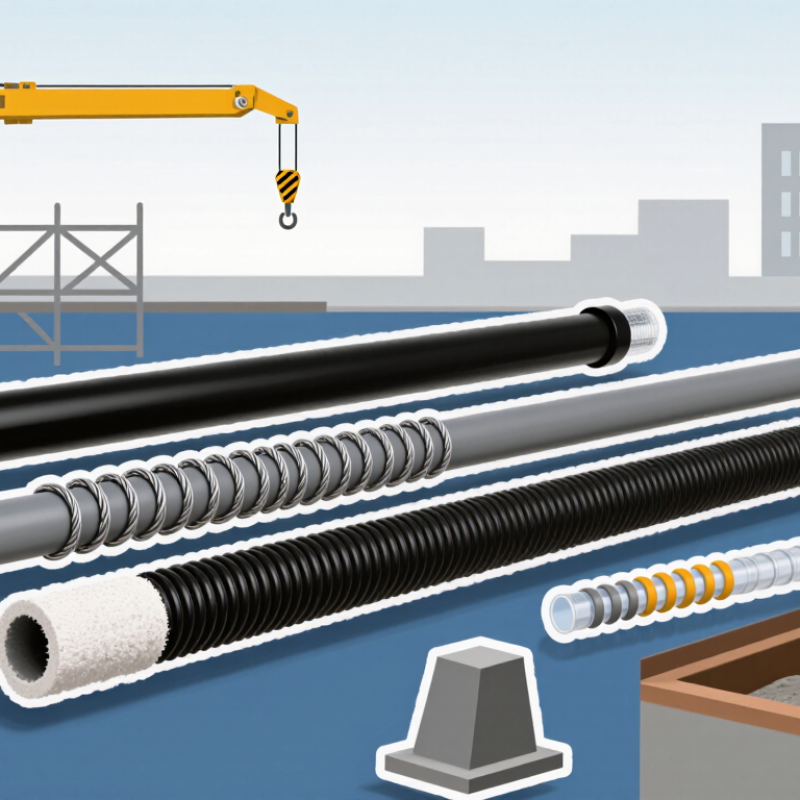
What Are the Top Concrete Delivery Hose Types in 2026?
Concrete delivery hoses differ in flexibility, reinforcement, diameter, and intended position in the pumping system. A boom end hose is typically short and flexible, allowing an operator to guide the discharge near the pour. Its flexibility helps with positioning, but repeated bending can accelerate wear near the ends. Small details matter.
Line-pump hoses are made for longer ground runs and must handle the pressure and abrasion created by concrete moving through the line. Reinforcement varies by design, so compare the hose’s rated working pressure with the pump requirements. A thicker-looking hose is not automatically the safer choice. Check the specification.
Reducer or transition hoses connect sections with different diameters, helping concrete pass between mismatched outlets and delivery lines. Their narrower sections can affect flow and may wear faster, especially with coarse aggregate or frequent pumping. Couplings also need to match the hose and be secured correctly. A leak can make a pour messy and disrupt the crew’s timing.
Names and construction details can vary between suppliers, so type alone is not enough for selection. Confirm diameter, pressure rating, coupling fit, concrete compatibility, and inspection guidance for the specific job. It is easy to focus on the pump and overlook the hose. That deserves a second look.
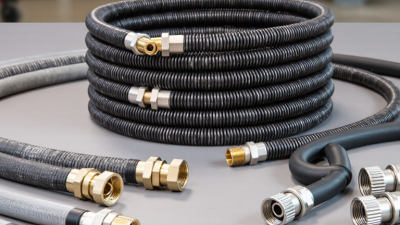
Steel-wire-reinforced concrete delivery hoses are designed to handle the high pressures created during pumping. Their embedded steel wires help resist expansion and support the hose wall under load. The inner tube must also withstand abrasive concrete moving through it, including coarse aggregate that can gradually wear the lining. A higher pressure rating alone does not make a hose suitable; its fittings, diameter, and intended pump application matter too. Small details matter.
Before use, check the hose’s stated working pressure against the pumping system’s requirements, and confirm that the end fittings are secure and compatible. Look for bulges, exposed wire, cuts, or concrete buildup near the couplings. These signs can point to damage or restricted flow. Never inspect a pressurized hose closely. Depressurize the line first. Replace a hose with visible reinforcement damage rather than relying on a quick patch. Even a careful visual check has limits, so follow the maker’s inspection and service guidance. One practical detail is easy to miss: tight bends near the pump outlet can add strain, even when the hose appears sound. The best choice is not always obvious on paper. Pressure, routing, and wear all deserve a second look.
| Hose Type | Typical Construction | Common Nominal Inside Diameters | Typical Application | Pressure and Handling Considerations | Key Selection Checks |
|---|---|---|---|---|---|
| Steel-wire-reinforced delivery hose | Wear-resistant inner tube with textile reinforcement and embedded steel-wire reinforcement; supplied with concrete-pump-compatible end connections. | Common sizes include 2, 2.5, 3, 4, 5, and 6 in (about 50, 65, 75, 100, 125, and 150 mm). | High-pressure concrete pumping lines, including demanding sections of a placing system. | Often selected for higher-pressure service. Some products are rated around 85 bar (about 1,230 psi), but the actual working-pressure rating is product-specific. | Confirm the marked working-pressure rating, inside diameter, coupling type, hose length, concrete compatibility, and inspection requirements. |
| Steel-wire-reinforced boom hose | Flexible concrete-pump hose designed for connection to the end of a placing boom; construction and reinforcement vary by model. | Commonly 3 or 4 in (about 75 or 100 mm), subject to the boom and system design. | Final placement from a boom, where flexibility helps direct concrete to the pour location. | Must be rated for the pump system and used within its specified bend radius. Avoid kinks, sharp bends, and unsupported loads on the connection. | Check the boom outlet size, hose length, end fittings, bend-radius limit, and compatibility with the pump’s maximum operating pressure. |
| Steel-wire-reinforced end hose | Short, flexible hose fitted at the discharge end of a boom or delivery line; may include steel-wire reinforcement for the intended service. | Often 3 or 4 in (about 75 or 100 mm); confirm the equipment specification. | Directing concrete during final placement and distributing it within the formwork. | Pressure capacity depends on the particular hose and pumping setup. The hose can move during operation, so workers must stay clear of its discharge end. | Verify the hose’s pressure rating, length, couplings, wear condition, and suitability for the concrete mix and placement method. |
| Fabric-reinforced concrete delivery hose | Elastomer inner tube reinforced with textile plies; it does not rely on steel-wire reinforcement for its structure. | Common delivery sizes include 2 to 6 in (about 50 to 150 mm), depending on the product and application. | Concrete conveying where the hose’s specified pressure rating and flexibility meet the system requirements. | Do not assume it has the same pressure capacity as a steel-wire-reinforced hose. Use only within the manufacturer’s stated working-pressure limit. | Compare the working-pressure rating, reinforcement details, abrasion resistance, temperature limits, and coupling assembly. |
| Concrete suction hose | Heavy-duty hose designed to resist collapse under vacuum; reinforcement commonly includes a rigid helix or other anti-collapse construction. | Size is selected to match the pump inlet and system layout; verify the specified inside diameter. | Connecting a concrete pump’s inlet to a hopper, supply point, or other suction-side component where permitted by the equipment design. | Vacuum resistance and pressure resistance are different ratings. A suction hose must not be treated as a high-pressure discharge hose unless it is explicitly rated for that service. | Check vacuum rating, allowable pressure, inlet compatibility, bend radius, and whether the hose is approved for the intended material. |
| Steel-wire-reinforced reducer hose | Reinforced hose or hose assembly with a reduced bore or transition to connect components of different diameters. | Available in matched inlet and outlet sizes; select both dimensions to suit the pipeline and pump configuration. | Connecting different line sizes in a concrete delivery system when a flexible transition is required. | Pressure rating applies to the complete assembly and its connections. A reduction in diameter can increase flow velocity and may affect pumping performance. | Confirm both end diameters, transition geometry, assembly pressure rating, coupling fit, and compatibility with the pump manufacturer’s setup. |
Note: Dimensions and pressure ratings vary by product and system. Use the hose’s marked rating and the pump-system specification; never exceed the rating of the lowest-rated component. Inspect hoses and couplings regularly, and remove damaged or excessively worn equipment from service.
Textile-reinforced concrete delivery hoses use fabric layers to provide reinforcement without relying solely on heavy steel wire. Depending on diameter, pressure rating, and construction, they may be easier to position at a placing point than a comparable wire-reinforced hose. That matters on site. A crew guiding a hose around rebar or across a slab benefits from less awkward handling, especially during repeated moves. But lighter does not mean effortless: wet concrete, hose length, and pumping pressure still affect control.
NIOSH’s Applications Manual for the Revised NIOSH Lifting Equation (1994) gives a 51-pound recommended weight limit under ideal lifting conditions. The manual lowers that limit when reach, twisting, or repetition increases. This is not a hose-weight limit, but a useful ergonomic reminder: actual handling conditions matter. Textile reinforcement also needs careful selection. Check the hose’s stated working pressure and compatibility with the pump, concrete mix, and couplings; fabric construction alone does not establish suitability.
Tips: Before each pour, inspect the cover for cuts, bulges, or exposed reinforcement, and check couplings for wear. Keep bends broad and support the hose near the outlet. A lighter hose can still whip or kink. Small details are easy to miss.
Boom-end hoses provide the final connection between a placing boom and the concrete surface. Their flexibility helps crews guide concrete around reinforcing bars, form edges, and congested corners. A short hose can improve control, but excessive bending or dragging can strain couplings and disrupt flow. Keep the hose supported and avoid sharp kinks.
ACI 304R-00, Guide for Measuring, Mixing, Transporting, and Placing Concrete, gives a practical aggregate-sizing limit for pumping: crushed stone should generally be smaller than one-third of the line’s narrowest inside diameter; rounded aggregate, smaller than two-fifths. This matters at the boom end, where a sudden restriction or poorly proportioned mix can raise blockage risk. The rule is a guide, not a substitute for checking the actual mix and equipment.
Before placement, crews should inspect the hose cover, end fittings, and coupling retention, then confirm the hose’s pressure rating suits the pump system. Small details matter. Watch how the hose moves when the boom changes position, and keep people clear of its discharge end. One detail is easy to overlook: a hose that feels manageable while empty can pull hard once concrete fills it. I would not rely on aggregate sizing alone; site trials and steady communication still matter.
What Are the Top Concrete Delivery Hose Types in 2026?
Choosing a Hose by Pump Setup, Pressure, and Concrete Mix
Hose choice starts with the pump layout, not the catalogue. A stationary pump feeding a long, fixed line usually needs rigid pipeline for most of the route, with a flexible rubber end hose for placement. A boom pump needs a hose suited to repeated movement and the machine’s specified working pressure. Handy rule: match the hose and couplings as one pressure-rated assembly.
Concrete mix matters just as much. Larger aggregate, stiff mixes, and long runs can increase resistance; tight bends and sudden bore reductions add more. ACI 304.2R-17, Placing Concrete by Pumping Methods, identifies line layout and concrete consistency as key pumping considerations. Don’t choose by diameter alone. Check the pump’s pressure limits, hose markings, coupling compatibility, and mix specifications before pouring. A neat spec sheet can still miss a worn coupling.
Scale is not a pressure guide. The USGS Mineral Commodity Summaries 2025 estimates U.S. cement production at about 86 million metric tons in 2024, showing the material’s broad use, not a universal hose requirement. Inspect for bulges, exposed reinforcement, and damaged ends before each shift. Replace doubtful sections; visual checks cannot reveal every internal defect. A little inconvenient, but worth doing.
Choose a hose by pump setup, pressure, and concrete mix.
The one-third-bore aggregate limit is a screening rule of thumb, not a guarantee of pumpability. Actual suitability also depends on the mix, bends, pump setup, and the narrowest section of the delivery line. Before pumping, confirm that the hose’s rated working pressure and fittings meet the pump’s requirements, including possible pressure surges; follow the hose and pump manufacturers’ instructions.